
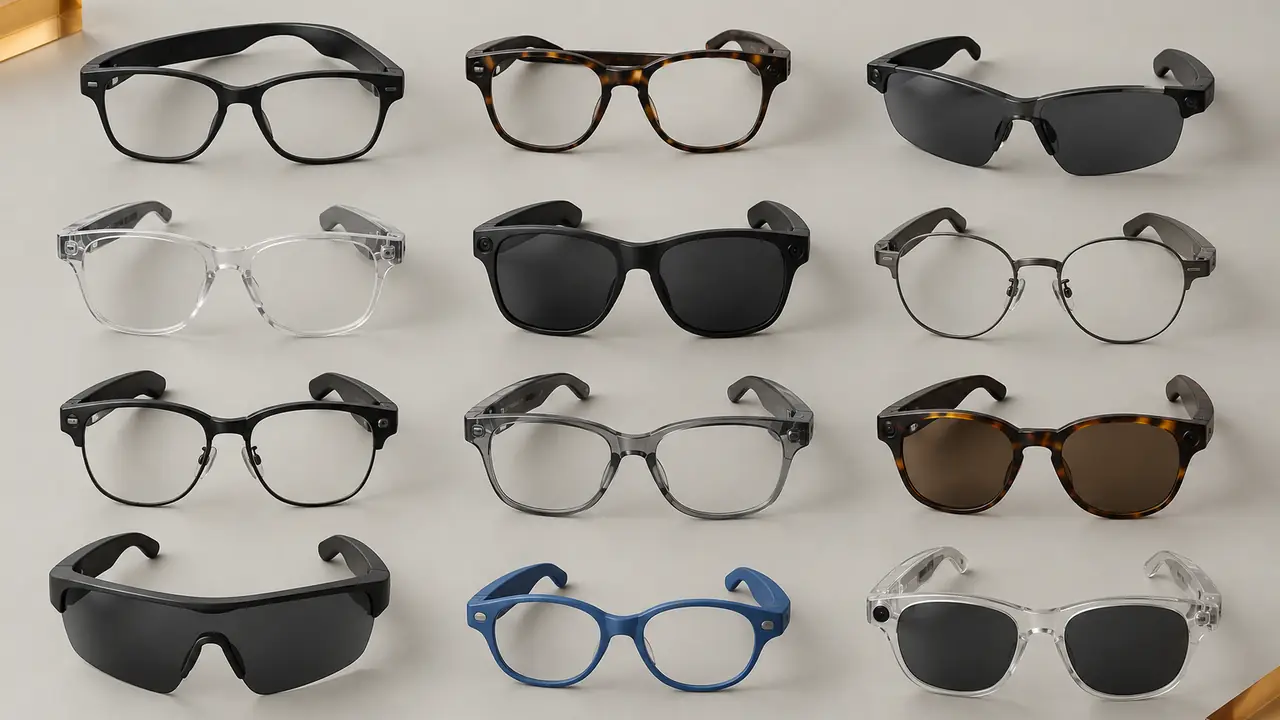
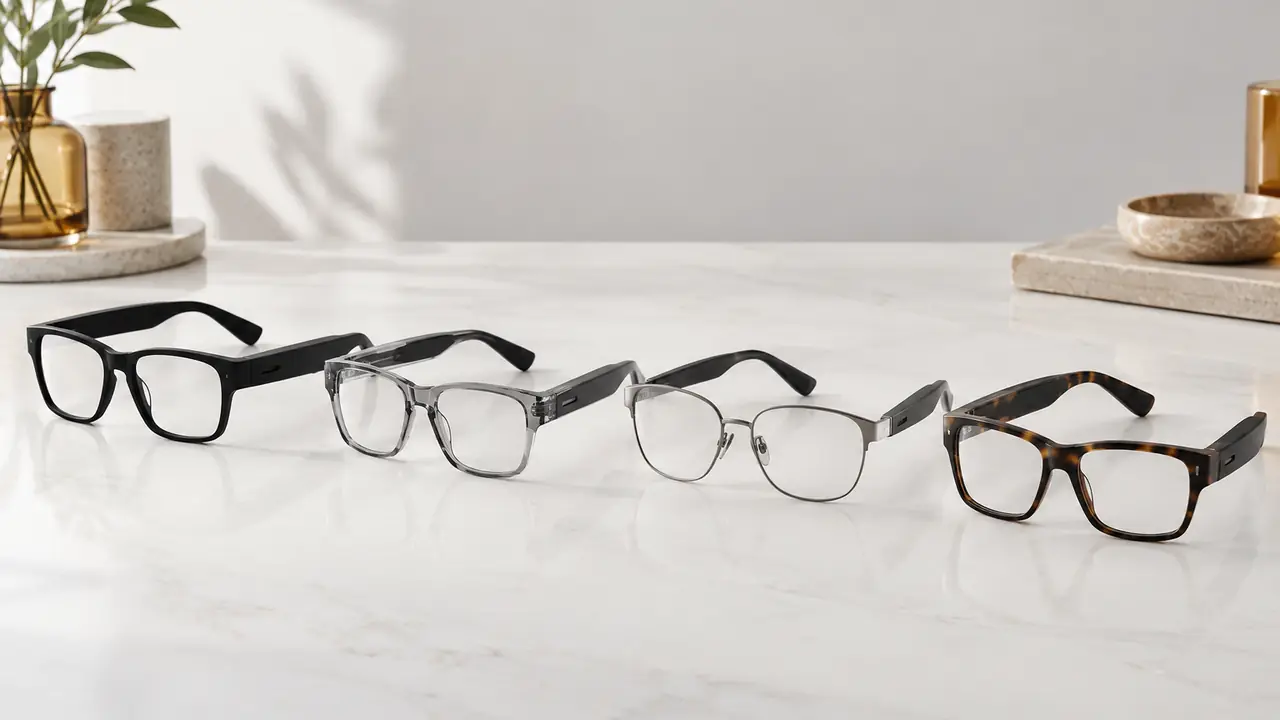
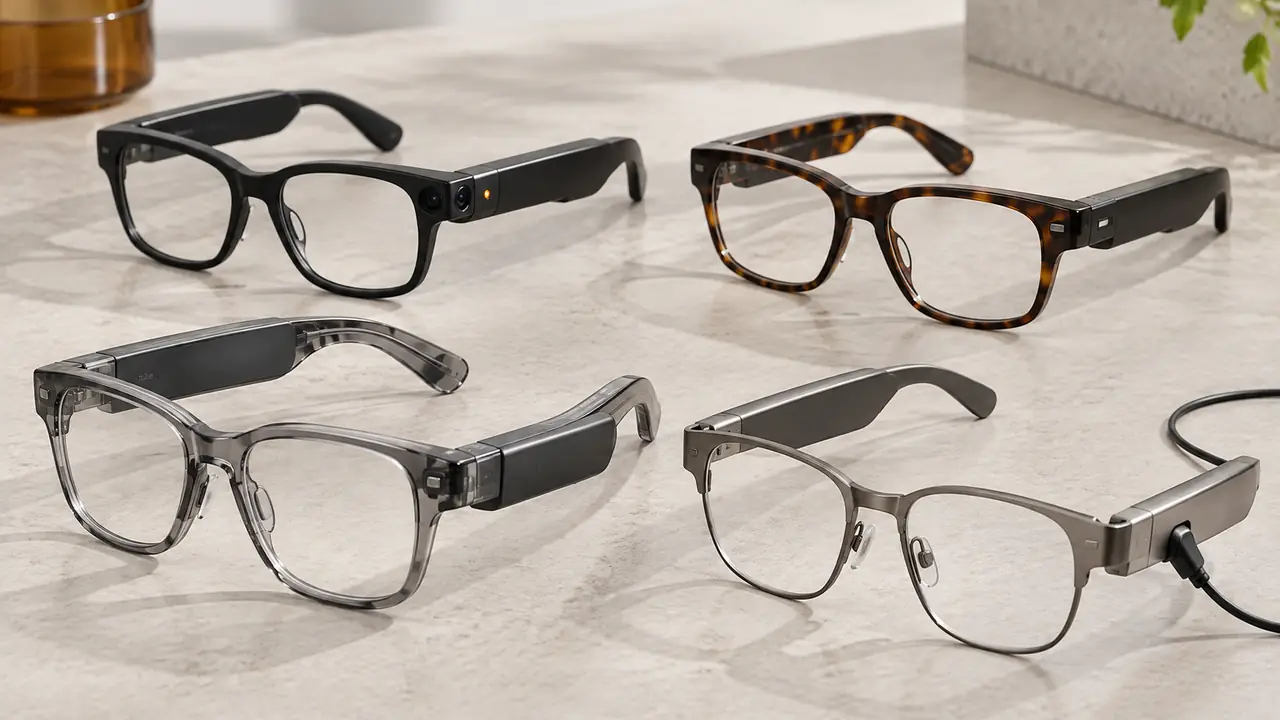
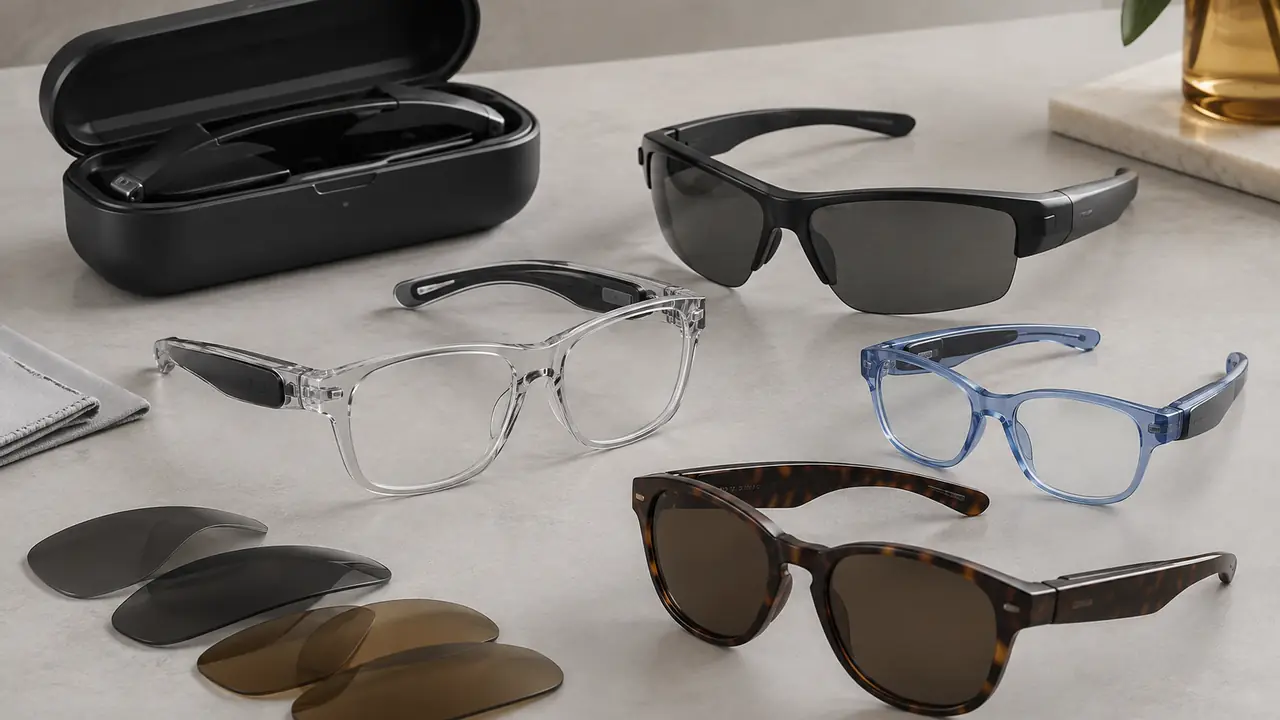
How the twelve lines are organised
Every pair of smart glasses on this site is built from the same six layers: a front with lenses, a hinge that carries a flex cable, a board with the chipset, cells and charging contacts, an audio or imaging module, and microphones, controls and app. What changes from line to line is which layer does the selling. In audio lines the speaker and the battery decide the product; in AI and imaging lines the microphone array, the camera module and the app decide it; in specialty lines the frame, the lens and the fit decide it. That is why the twelve lines are grouped into three families rather than listed by price or by style.
The family cards below the introduction link to each family page, and each line page carries a teardown card with the six modules, the options a brand can change and the ranges seen across the category. Ranges are typical across the category, per spec sheet; they are not measured values of any one model.
The three families at a glance
| Family | Lines | What sells it | Typical role in a range |
|---|---|---|---|
| Audio glasses | Bluetooth audio, open-ear, bone conduction, business call | Speaker design, call microphones, runtime, comfort | Entry and volume tier; easiest to certify and ship |
| AI and imaging glasses | AI translation, camera, photochromic and AR, developer | App, cloud services, camera module, display optics | Feature tier; carries most of the buyer questions |
| Specialty and accessories | Rx-ready frames, sports, kids, lenses and charging cases | Fit, lens options, frame material, spare parts | Holds the range together and reduces returns |
The audio family shares one core: a Bluetooth 5.2-5.4 audio SoC, two small cells across the temples and magnetic charging. Music playback runs about 4 to 13 hours across the category. The AI and imaging family adds a second layer of electronics - more microphones, a camera with a recording indicator LED, Wi-Fi transfer or a display module - and with it a heavier app and firmware workload. The specialty family reuses those boards in fronts designed for prescription lenses, sport wraps and lighter kids frames, and supplies the replacement lenses, cases and cables every range needs.
How a range is usually built
Few brands start with twelve lines. A common pattern is one everyday audio model, a sunglass version on the same board, and one feature model that gives the range a story. Because the audio board is shared, the second and third models cost far less engineering time than the first. Accessories follow early: replacement lenses and a spare charging cable lower return rates more than most feature upgrades do.
- Good: a catalog Bluetooth audio model with your logo, clear and polarized lens options.
- Better: an open-ear or business call model with a stronger microphone array and multipoint pairing per firmware.
- Best: an AI translation or camera model, or a photochromic front, with app white-label where the program allows it.
The tiers are a planning tool, not a rule. A retailer serving optical customers may lead with Rx-ready fronts; a sports brand may lead with wraps and polarized lenses. Range logic is discussed in range planning.
Choosing your first line
Four questions settle most first choices. First, where will it be sold? A marketplace listing needs an FCC ID and a cell that ships under UN3481 and PI 967 Section II; an optical retailer needs fronts that a lens lab can edge. Second, does the product need a camera? Camera glasses raise privacy expectations, including a visible recording indicator, and in Europe the October 2026 EDPB statement sets out what regulators expect from manufacturers; it is guidance, not law, but buyers increasingly ask for it. Third, how much app work can you own? Translation and AI features depend on the app and translation engine, with typical cloud latency of 0.5-3 s; that is a service to maintain, not just hardware. Fourth, who wears it? Kids frames follow CPSIA in the United States and are discussed only in terms of structure: UV400 lenses, optional blue-light filtering lenses with no health claim, volume limits and screen-time reminders per firmware.
Quantities, samples and the next step
Catalog models usually start at 50-500 pairs per model, logo programs at 500-1,000 pairs, accessories at 500-1,000 pieces and kids models at 1,000 pairs; full custom OEM or ODM work, with a new frame mould, acoustic tuning or app white-label, starts at about 3,000 pairs per model. Catalog samples take 5-10 working days and engineering samples for a custom build 30-60 days including tooling. These are typical reference ranges, confirmed in writing for each program. To compare lines side by side, read the smart glasses types guide; when you have a shortlist, send it through the quote form and the desk will reply with matching partner-plant options and a sample plan.