
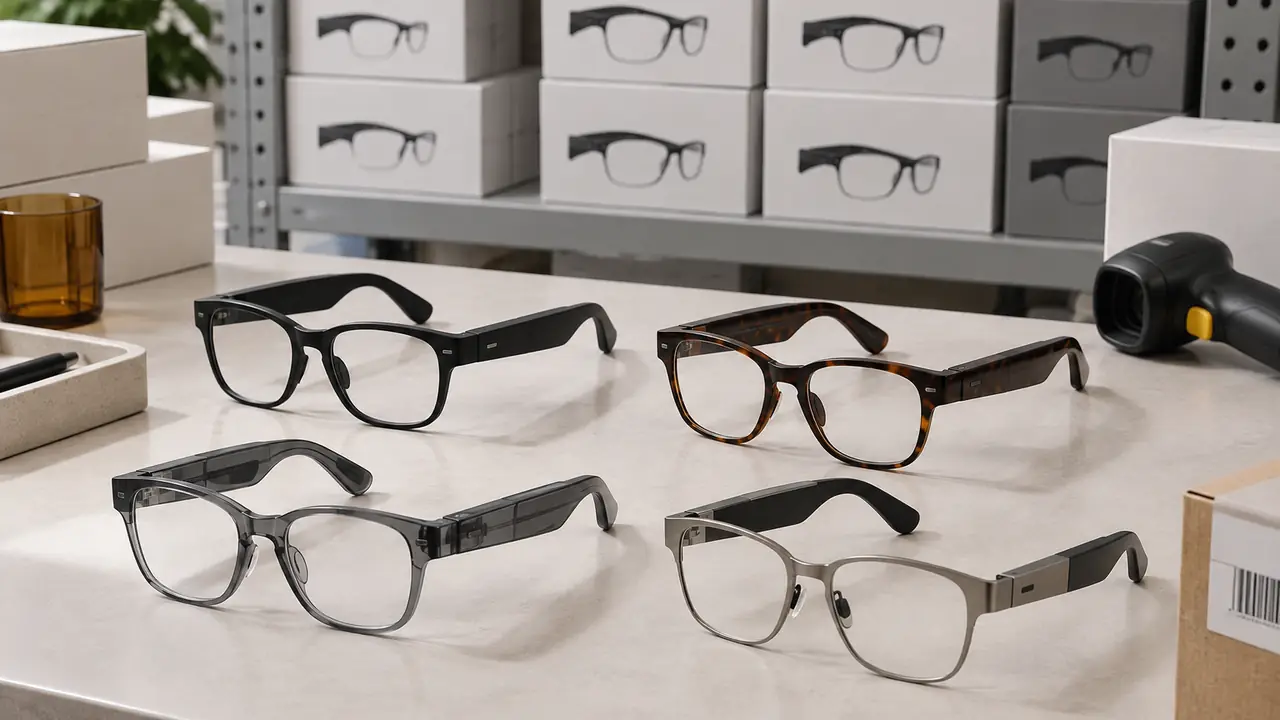
Why tiers matter in this category
Smart glasses combine two product categories with very different buying habits. Eyewear shoppers choose on shape, colour and fit; electronics shoppers choose on runtime, sound and features. A range that only varies the electronics leaves eyewear shoppers without choice, and a range that only varies colours leaves electronics shoppers unable to see why one pair costs more than another. A tiered plan - commonly called good, better, best - gives each group a clear step up and gives the buyer a structure for negotiating samples, quantities and test scope.
The tiers should differ in what the customer can feel or use: sound and call quality, runtime, lens options, materials, and the presence of AI or camera functions. Differences that only show up on a spec sheet, such as a minor chipset revision, rarely justify a separate tier and add certification work without adding sales.
Tiers also map onto channels. Marketplace sellers usually lead with the good tier and compete on clear specifications and dependable reviews; optical retailers and DTC brands lean towards the better and best tiers, where frame choice, lens options and fitting add value; distributors want all three so that each reseller can pick the depth that suits its customers. Deciding which channel each tier serves before sampling keeps the brief focused and stops the range from drifting into near-duplicates.
A three-tier structure
The structure below is a starting point drawn from the lines buyers most often combine. Figures are typical across the category, per spec sheet, and every value is confirmed on the golden sample for each program.
| Tier | Typical lines | What separates it | Usual route |
|---|---|---|---|
| Good | Bluetooth audio glasses | Bluetooth 5.2-5.4, open-ear speakers, music 4-13 h typical, IPX4 per test, TR90 frame | Catalog model with logo, 50-500 pairs per model |
| Better | Open-ear audio with ENC, business call glasses, photochromic options | Dual or quad mic ENC per firmware, multipoint, polarized or photochromic lens choice, wider frame range | Logo and packaging program, 500-1,000 pairs per model |
| Best | AI translation glasses, camera glasses, Rx-ready frames | Translation per app and engine, camera with recording indicator LED, metal or acetate fronts, Rx-ready fit | Logo program or full custom from 3,000 pairs per model |
The good tier carries the volume and the first impression of the brand. It should be dependable rather than cheap: a reliable hinge, a clean pairing flow and honest runtime claims do more for reviews than an extra feature. The better tier is where most margin and differentiation sit, usually through call quality, lens options and frame choice. The best tier signals where the brand is heading and covers buyers who want AI, translation or a camera. Details for each family are on audio glasses and AI glasses.
The modules that separate the tiers
Every pair has the same six modules: front and lenses, hinge and flex, board and chipset, battery and charging, audio or imaging module, and mics, controls and app. Range planning is mostly a matter of deciding which of these change between tiers and which stay shared.
- Keep shared where possible. Charging cable and pogo contacts, the companion app shell and the hinge design can often be common across tiers, which simplifies spares and after-sales.
- Change what customers feel. Speaker tuning, microphone count, lens type and frame material are the visible steps.
- Add functions at the top. AI processing, translation and cameras add chipset cost, power draw and certification scope; keeping them in the best tier contains that work.
- Watch weight. Finished pairs typically weigh 27 to 50 grams across the category. Each added module moves a model up that range, so the best tier needs extra attention to balance and fit.
The trade-off between runtime and features is covered in the battery and runtime guide.
SKU discipline: colours, sizes and lenses
SKU counts grow quickly in eyewear. Three models in three colours with two lens options already make eighteen SKUs, each with its own carton, barcode and stock position. For a first season, most buyers keep the count tight and expand where sell-through proves demand.
| Lever | Effect on range | Common first-season choice |
|---|---|---|
| Frame colour | Eyewear appeal; each colour needs its own stock | Two to three colours on the good tier, one or two above |
| Frame size | Fit range; lens width 48-56 mm, bridge 16-20 mm, temple 140-150 mm typical | One standard size, a wider fit later if returns show a need |
| Lens type | Clear, polarized, photochromic, blue-light filtering (no health claim) | Sell lenses as accessories rather than separate frame SKUs |
| Packaging | Retail box per channel | One box design per tier, channel stickers where needed |
Selling replacement lenses and clip-on fronts as accessories is often the cleanest way to offer lens choice without multiplying frame SKUs. Accessories typically start at 500 to 1,000 pieces, which also gives the range an attachment sale.
Certification and timing across tiers
Each distinct radio design needs its own approvals: FCC Part 15.247 and Subpart B for the US, CE under RED 2014/53/EU with EN 300 328, EN 301 489, EN 62368-1 and EN 18031 for Europe, and Bluetooth SIG qualification. Colour and logo variants of the same design usually share a test report, but a changed board, antenna or battery may not; confirm the scope with your test lab. FCC and CE lab testing typically takes three to six weeks per lab and scope, so a range with three distinct designs needs that work planned in parallel.
Lead times differ by route. Catalog and logo models typically ship in 20 to 35 days after sample approval; full custom builds typically take 45 to 75 days, not counting certification queues, with engineering samples in 30 to 60 days including tooling. A common pattern is to launch the good and better tiers on catalog or logo routes and bring the best tier a season later, once the brand has review data and a clear view of which features customers use.
From plan to samples
A range plan becomes real at the sample stage. The desk shortlists partner plants for each tier, gathers catalog or logo samples side by side and records the differences on one spec sheet so that the tiers stay distinct in production. The cost drivers that separate tiers are explained in what drives smart glasses costs. Quantities and lead times are reference ranges confirmed in writing for each program on MOQ and lead time, and the quote form accepts a full range brief rather than one model at a time.