
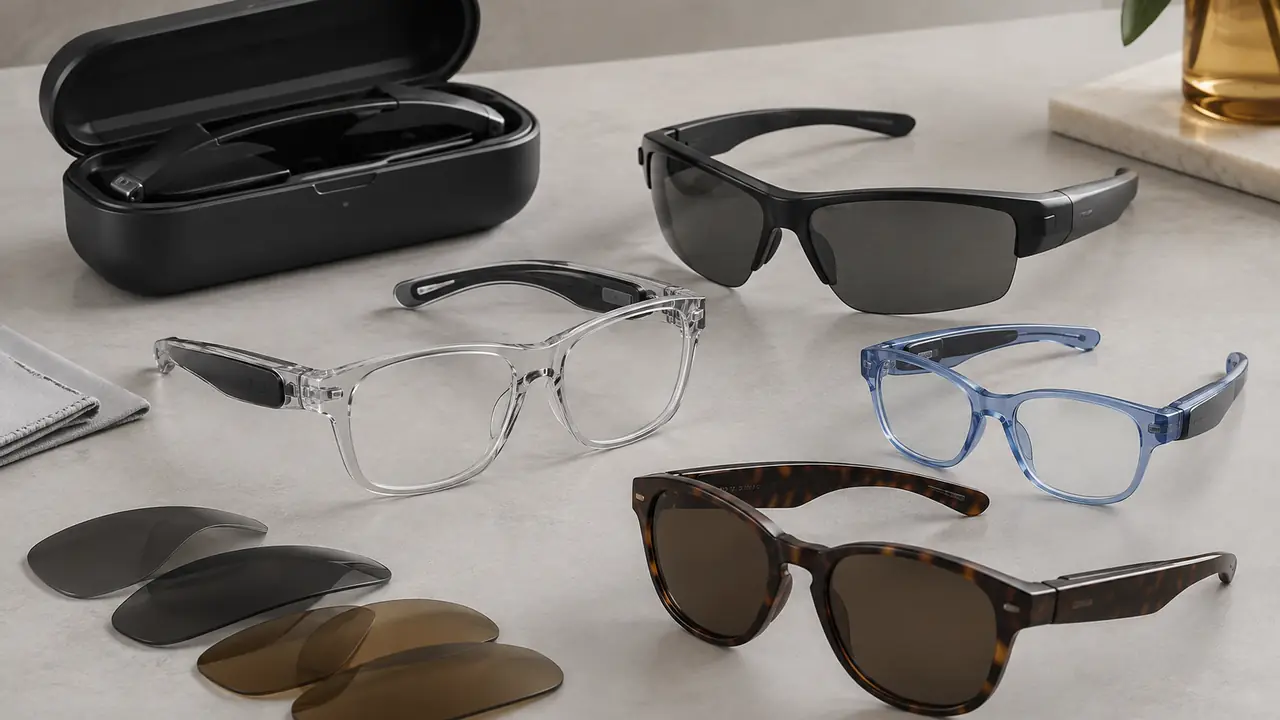
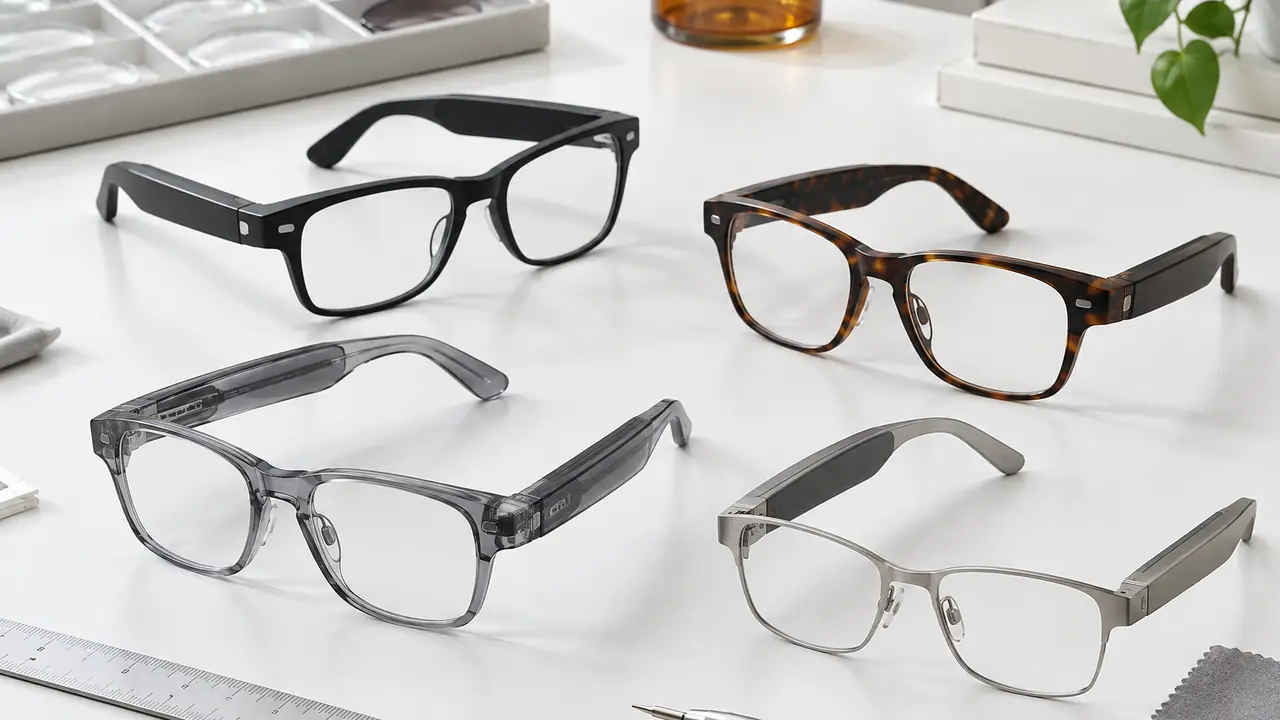
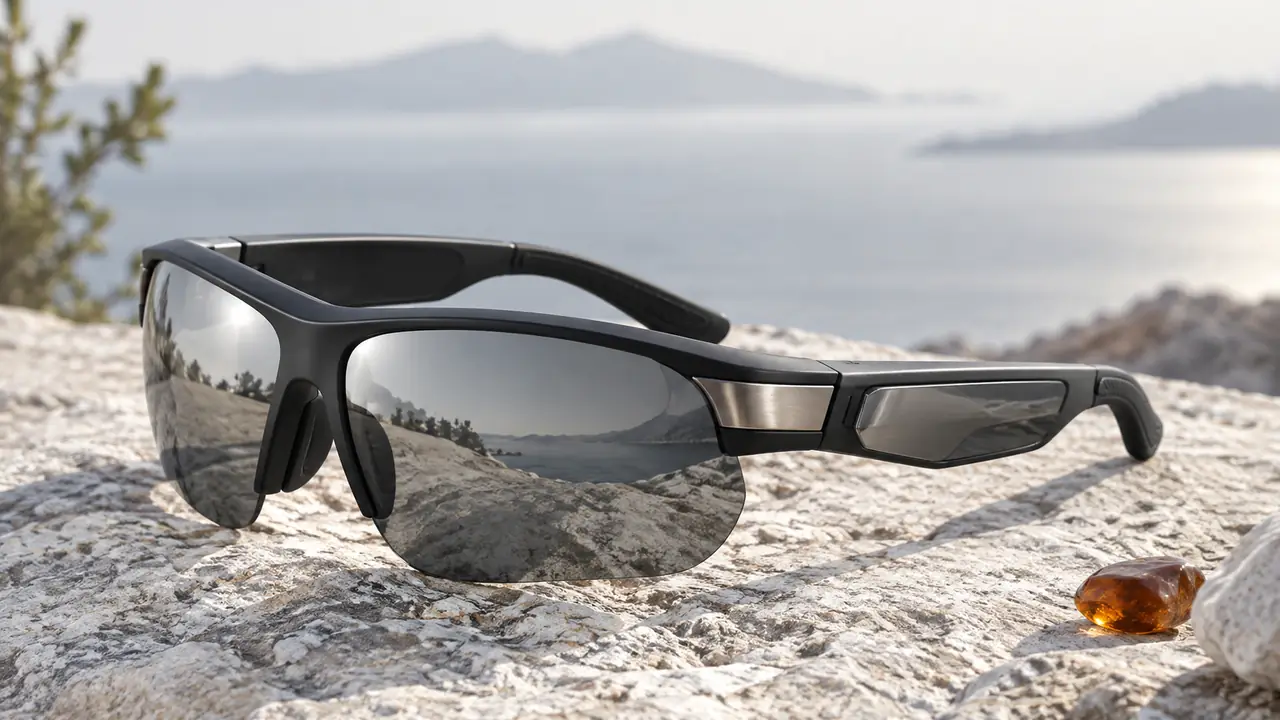
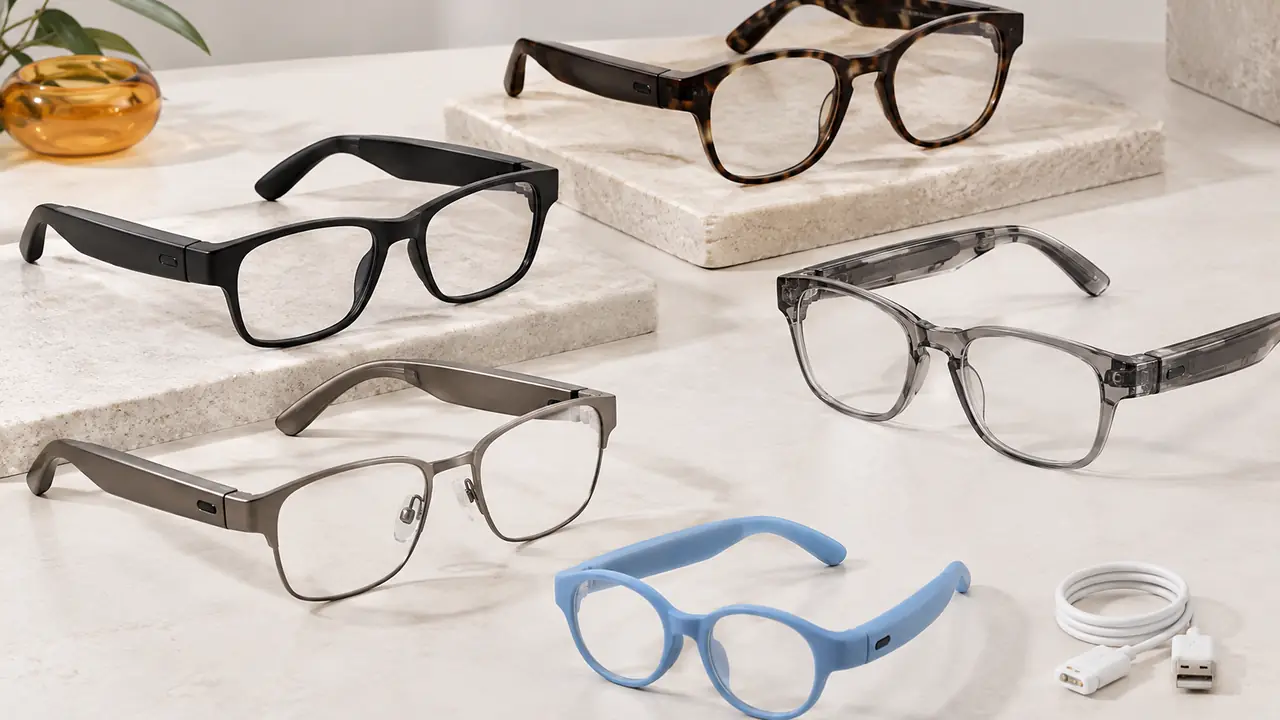
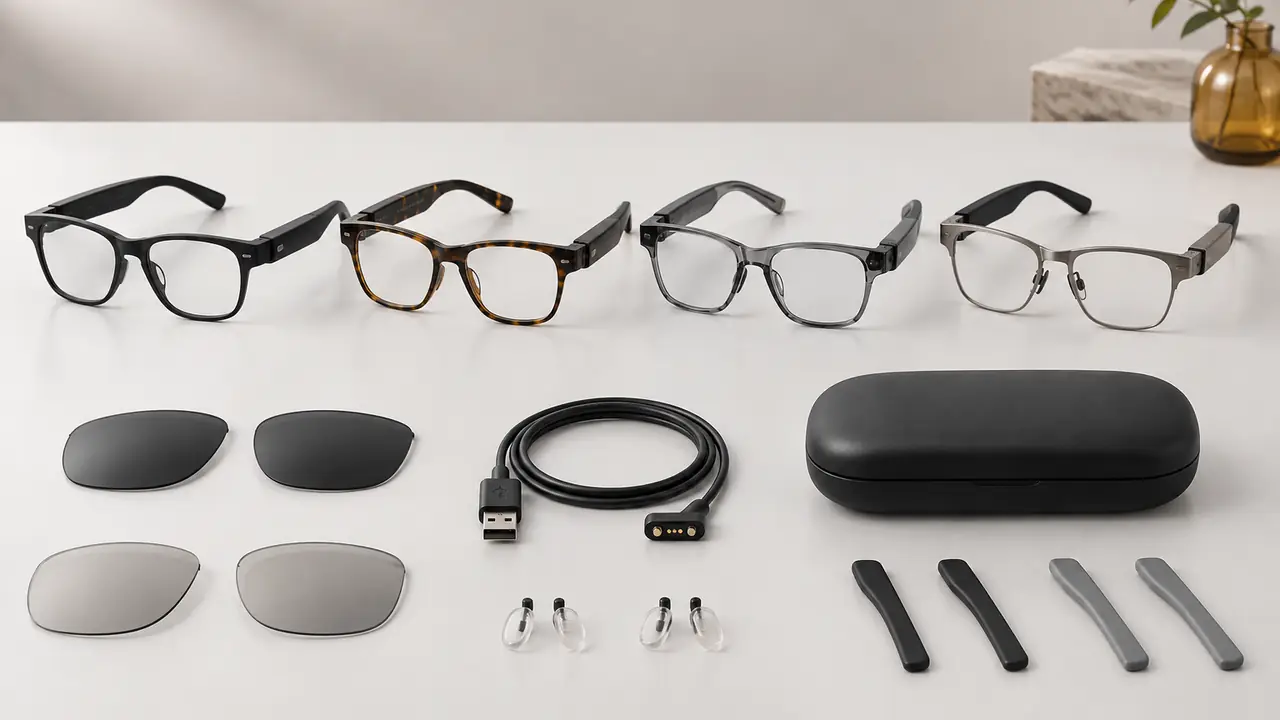
What the specialty family covers
Most smart eyewear ranges are built around a core of everyday audio glasses and, increasingly, AI and camera models. The specialty family is what turns that core into a complete range. It answers four questions buyers hear from their own customers: can I wear this with my prescription, can I wear it while cycling or running, is there a version for my child, and where do I get a spare lens, cable or charging case. Each question maps to one line with its own frame geometry, lens rules, test plan and documents.
All four lines reuse the same temple electronics where possible: a Bluetooth audio SoC, two small cells, open-ear speakers and microphones, assembled by partner plants in Shenzhen. What changes is the front, the lens and the fit parts, which come from the frame clusters in Shenzhen Henggang and Wenzhou Ouhai and the lens plants in Danyang and Xiamen. The desk aligns those three supply chains in one program, so a sports wrap or a kids frame can share a proven board instead of starting from zero.
Four lines side by side
The table summarises the typical ranges across the category for each line. Figures are reference ranges from public spec sheets, not measured values of any one model; every program confirms them on its golden sample.
| Line | What defines it | Typical range | Extra documents or rules |
|---|---|---|---|
| Rx-ready smart frames | Front designed for prescription lenses cut by an optician or lens lab | Lens 48-56 mm, bridge 16-20 mm, temple 140-150 mm; lens power range per lab | Lens standards per market; edging and fitting instructions |
| Sports smart glasses | Wrap front in PC or TR90, grip parts, open-ear listening | IPX4-IP55 per test; polarized or photochromic lens options | ISO 12312-1 or ANSI Z80.3 lens category and labelling |
| Kids smart glasses | Light TR90 or silicone frame, volume cap, parent app features | Usually under 30 g per model; UV400 lenses | CPSIA children's product rules and CPC in the US; COPPA may apply to the app |
| Accessories | Replacement lenses, cables, charging cases, fit parts | Fits 48-56 mm lens fronts; case battery per Wh | UN 38.3 and UN3480 or UN3481 for cases with cells |
How buyers usually combine them
A DTC brand often launches one everyday audio model and adds an Rx-ready version of the same front in the first year, because glasses wearers are a large share of the people who ask about the product at all. Marketplace sellers tend to add a sports model and a set of accessories, since spare cables and cases reduce returns and create repeat orders. Retailers and optical chains look first at Rx-ready fronts and kids frames, which suit an in-store fitting service. Distributors want all four, so they can cover a region with one supplier relationship and one spare parts list.
The common thread is that the specialty lines should share as much as possible with the core: the same charging contacts, the same app, the same cable. That keeps spare parts simple and lets accessories serve every model in the range. Range planning is covered in smart glasses range planning.
Standards that change by line
Radio and battery rules apply to every powered model: FCC Part 15.247 and Part 15 Subpart B in the United States, CE marking under the Radio Equipment Directive 2014/53/EU in the European Union, including EN 18031 cybersecurity for wearable radio equipment since 1 August 2025, and a UN 38.3 test summary for the cells. On top of that, each specialty line adds its own layer. Sunglass lenses on sports models need a lens category under ISO 12312-1, and a Category 4 lens must be labelled as unsuitable for driving. Kids models sold in the US as products for children aged 12 or under fall under CPSIA, which needs a Children's Product Certificate based on third-party testing. Charging cases with their own cells are judged as batteries in transport, under UN3480 or UN3481 depending on how they ship.
The full map by market is on compliance and certifications.
Quantities and timing
Typical reference ranges across the category: catalog models from 50-500 pairs per model, logo programs from 500-1,000 pairs, and full custom OEM or ODM from 3,000 pairs. The kids line usually starts at 1,000 pairs per model because of the extra testing, and accessories such as replacement lenses and charging cases from 500-1,000 pieces. Catalog samples take 5-10 working days and logo samples 10-15 working days; batch production for catalog and logo programs runs 20-35 days. All of these are confirmed in writing for each program on MOQ and lead time. To brief the desk on a specialty line, use the quote form.