
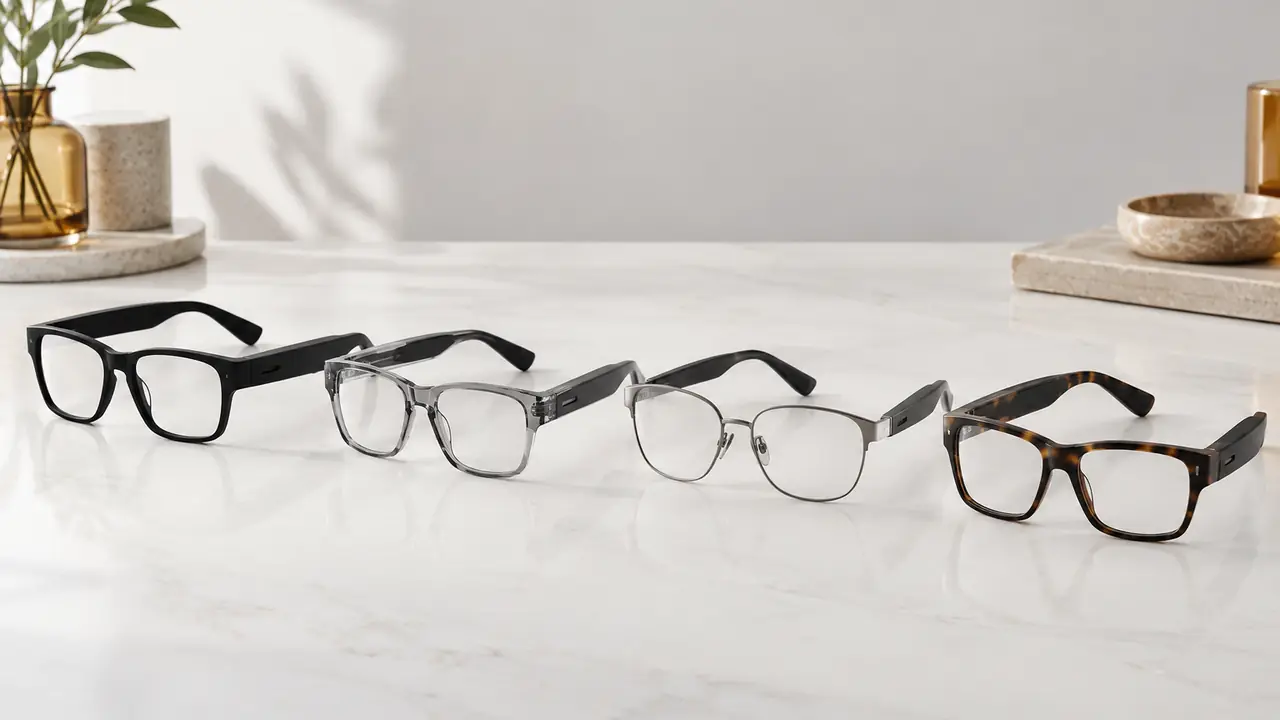
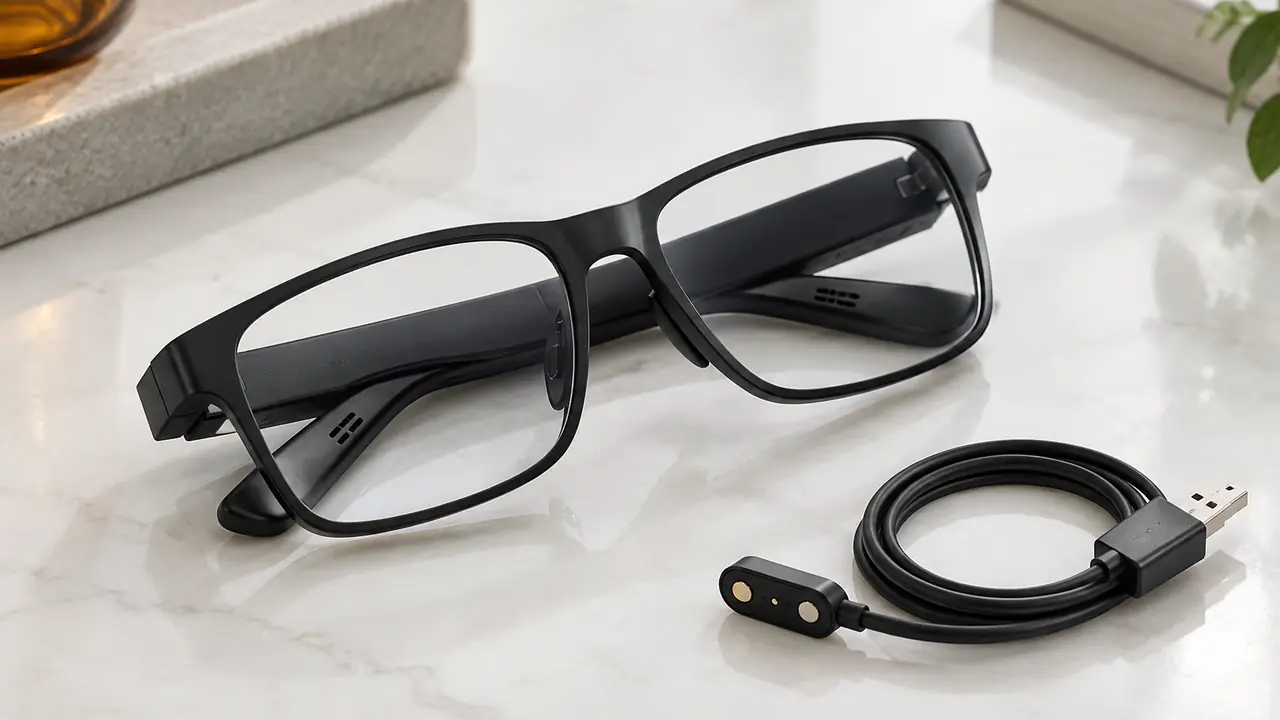
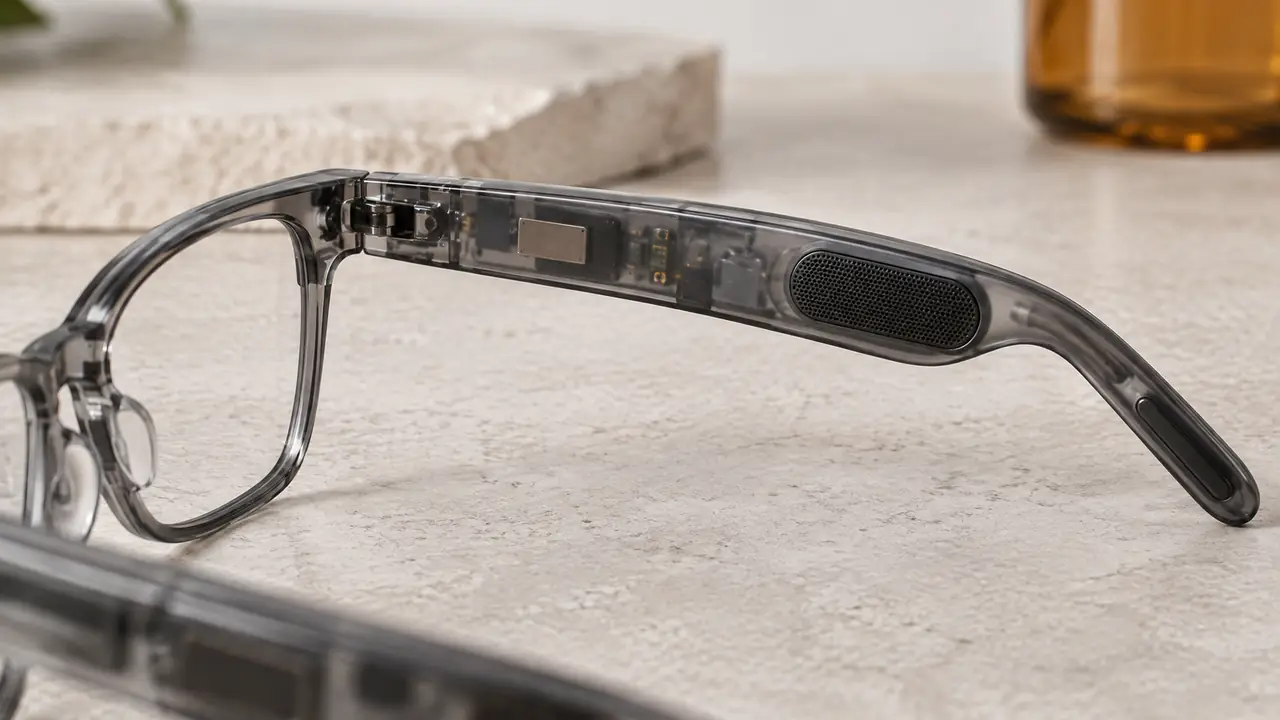
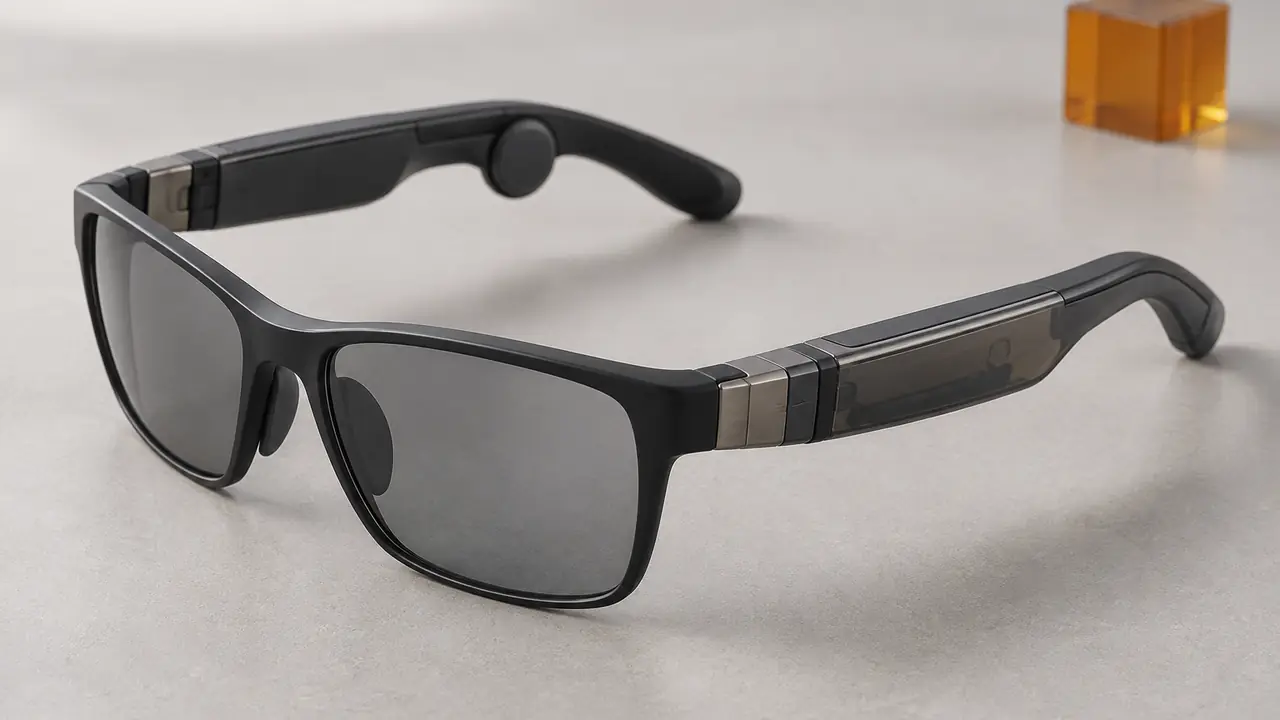
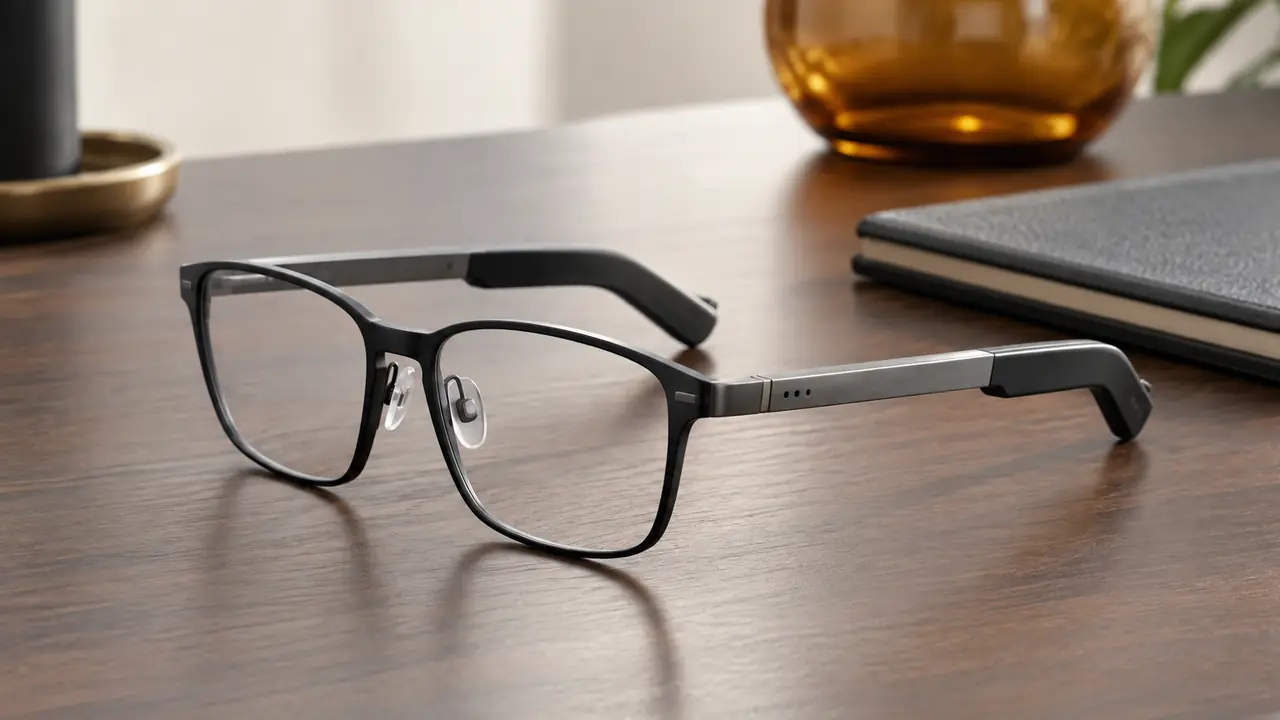
One product family, four ways to deliver sound
Audio glasses are the volume tier of most smart eyewear ranges. They carry no camera and no display, so they avoid the privacy questions that camera models raise, they are the simplest to certify and they ship as ordinary consumer electronics with small lithium-ion cells. IDC expected China's smart glasses shipments to reach about 2.9 million units in 2025, with audio and audio-camera glasses accounting for roughly 2.2 million of them - a signal that this is where buyers build volume before adding AI or imaging models.
Inside the family, every model shares the same skeleton: a front with lenses, a hinge that carries a flexible circuit, and two temples holding the battery, the Bluetooth board, the sound source and the microphones. What separates the four lines is the sound source and the call pickup. Bluetooth audio glasses use a simple directional speaker per temple. Open-ear audio glasses put more engineering into the speaker chamber to push loudness up and sound leakage down. Bone conduction glasses replace the speaker with a vibrating transducer pressed against the head. Business call glasses keep an open-ear speaker but invest in the microphone array and the call firmware.
The four lines side by side
The table summarises the typical ranges across the category. Figures are per spec sheet and per test report for each model; none is a measured value of a specific product.
| Line | Sound source | Typical reference points | Strongest use |
|---|---|---|---|
| Bluetooth audio | Directional speaker per temple | 27-50 g; 4-13 h music, 3-9 h calls; BT 5.2-5.4; IPX4-IP54 per test | Everyday wear, sunglass versions, entry price band |
| Open-ear | Ported speaker with acoustic chamber | Peak about 75-90 dB SPL per manufacturer; leakage control per acoustic test; dual or quad mic ENC | Music-first ranges, commuting, office |
| Bone conduction | Transducer on temple or cheekbone area | Bass and volume depend on contact pressure; usually heavier than open-ear; IPX4-IP55 per test | Sports and noisy outdoor settings |
| Business call | Open-ear speaker, multi-mic array | ENC or AI noise reduction per firmware; multipoint; optional blue-light filtering lenses (no health claim) | Calls, meetings, hands-free work |
Because the lines share a skeleton, a brand can often run two of them on related boards and the same front, which keeps frame tooling and retail packaging common across the range.
How to choose a line for your range
Start from the buyer's main complaint, not from the feature list. If the end customer mostly listens to music and podcasts while walking or working, the open-ear line gives the best balance of loudness and privacy. If the customer is outdoors, cycling or running and wants the ear canal and the area in front of the ear completely free, bone conduction is the line to test, accepting more weight and a fit that matters more. If the product will be sold to people who spend their day on calls, the business call line spends its budget where those buyers notice it: microphones, noise reduction and switching between a laptop and a phone. And if the range needs an entry model at volume, the Bluetooth audio line is the base.
- Brand owners usually anchor the range with open-ear and add a business call model as a second tier.
- Marketplace sellers and wholesalers start with Bluetooth audio, because catalog models allow 50-500 pairs per model and short sample times.
- Enterprise and project buyers focus on business call glasses and verify meeting software compatibility per project.
The trade-off between the two most debated sound sources is covered in detail in bone conduction vs open-ear glasses.
What stays the same across all four lines
Whatever the sound source, the same three supply chains meet in each pair. Temple electronics - acoustics, PCBA and cells - come from Shenzhen's Bao'an and Nanshan districts and nearby Dongguan. Frames come from the Henggang eyewear cluster in Shenzhen and from Ouhai in Wenzhou, and lenses from Danyang and Xiamen. The desk aligns fit, lens specification, assembly and inspection in one program, so that a frame shaped in one city and a temple board tuned in another arrive at final assembly as one product.
The compliance path is also shared. The radio is authorised under FCC Part 15.247 and Part 15 Subpart B in the United States and under CE RED 2014/53/EU in the EU, including EN 18031 cybersecurity since 1 August 2025. Cells need a UN 38.3 test summary and ship under UN3481, PI 967 Section II by air. Sunglass lenses follow ISO 12312-1 or ANSI Z80.3. Water resistance is stated as an IPX4 to IP55 rating tested per IEC 60529, never as immersion-proof. The full route is on compliance and certifications.
Quantities, samples and the next step
Typical reference ranges for the family: 50-500 pairs per catalog model, 500-1,000 pairs per model for a logo program and from 3,000 pairs per model for full OEM or ODM work with a new frame mould, acoustic tuning or an app white-label. Catalog samples take 5-10 working days, logo samples 10-15 working days, and ODM engineering samples 30-60 days including tooling. Batch production runs 20-35 days for catalog and logo programs and 45-75 days for full OEM, excluding certification queues. All of these are confirmed in writing for each program; the current table is on MOQ and lead time.
The line cards below open the teardown of each model. When the brief is ready, send it through the quote form with the target market, the lines you are considering and the quantity per model.