
Why smart glasses are an engineering problem first
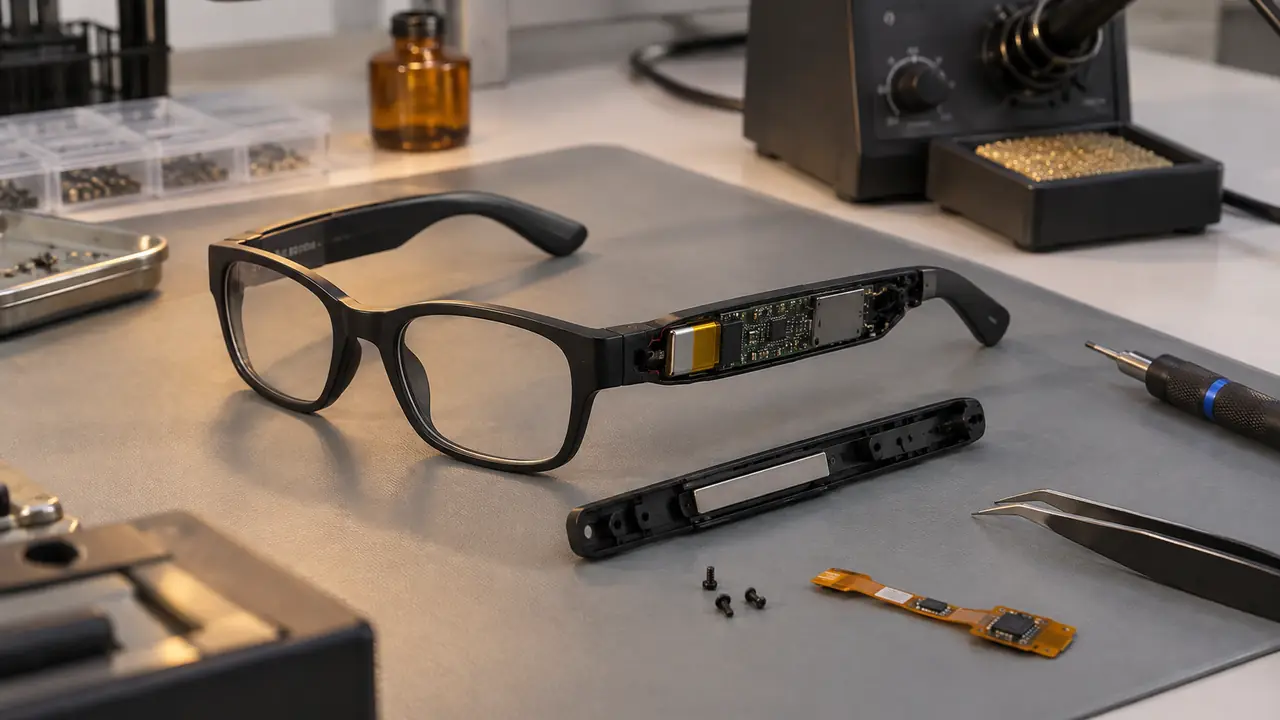
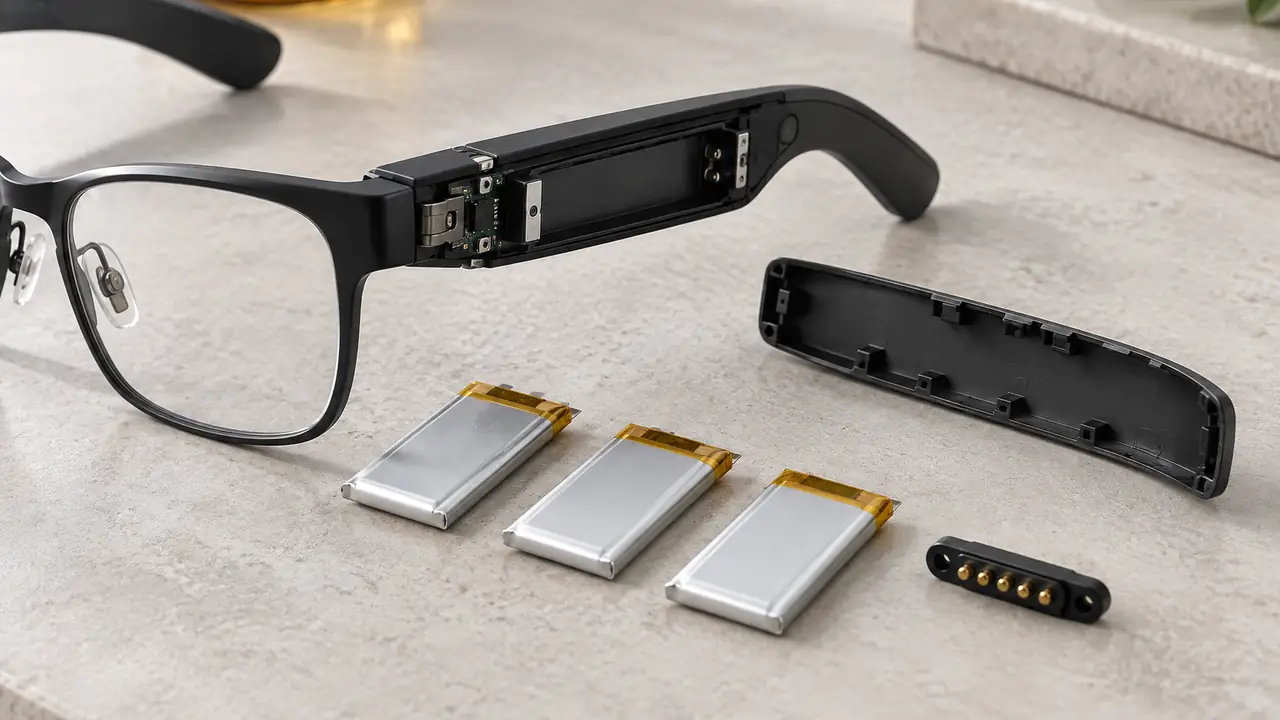
Smart glasses look like a fashion product and behave like a headset. Each temple carries a slice of consumer electronics - a lithium-ion cell, a board with a Bluetooth system-on-chip, a speaker or transducer, microphones, a touch strip and sometimes a camera - inside an arm only a few millimetres thick. The front holds lenses that must meet an optical standard, and the hinge between them has to fold thousands of times while a flexible circuit runs through it. Across the category, finished pairs weigh about 27 to 50 grams, which leaves very little room for margins: a slightly larger cell changes the balance on the nose, a thicker speaker chamber changes the temple shape, and a new front shape means a new mould.
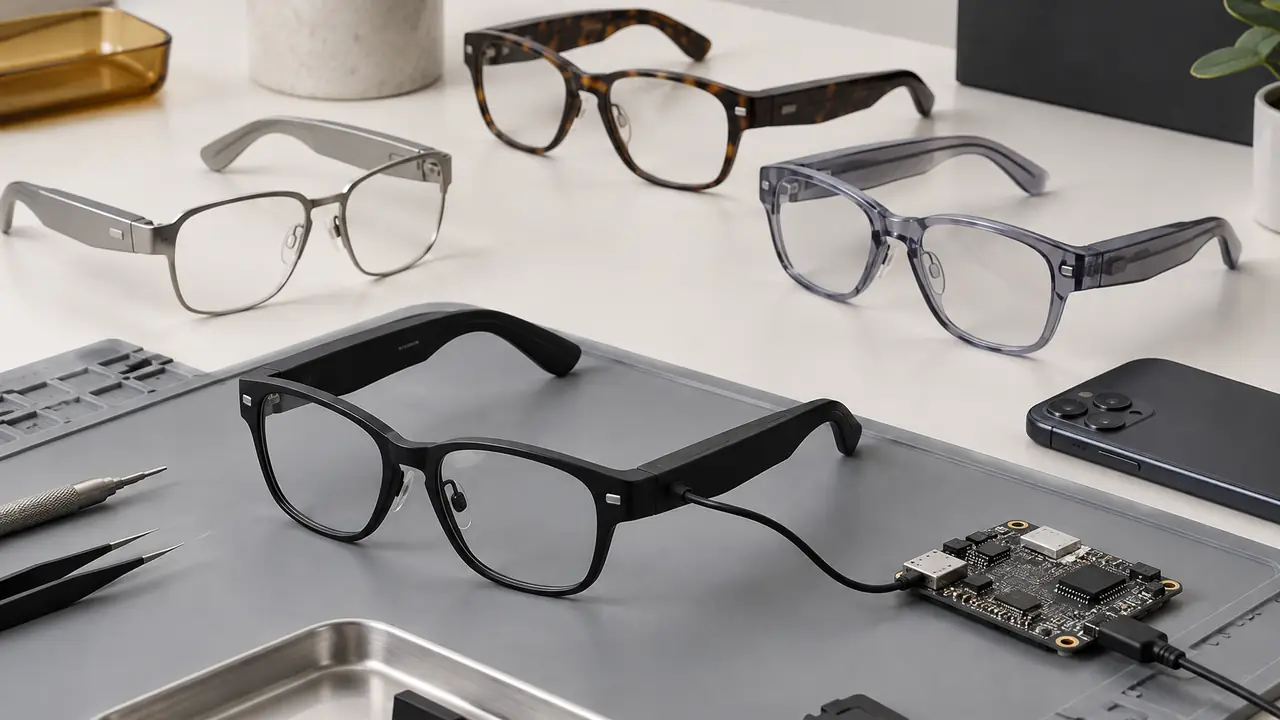
Most field problems in this category are therefore not defects of one part but mismatches between parts that come from different supply chains. Temple electronics are built around Shenzhen's Bao'an and Nanshan districts and nearby Dongguan, frames come from the Henggang cluster in Shenzhen and from Ouhai in Wenzhou, and lenses from Danyang and Xiamen. The desk's engineering role is to align these three chains in one program: fit, lens specification, assembly sequence and the test plan that proves the pair works as a whole.
The six modules at a glance
The table follows the order partner plants assemble a pair and the order used on every spec sheet the desk prepares. It lists the key design choice in each module, the failure that most often shows up in returns or inspection, and the line the spec sheet should carry so the choice is fixed before batch production.
| Module | Key design choice | Common failure | What the spec sheet should state |
|---|---|---|---|
| Front and lenses | Frame material and lens type: clear, filter, polarized, photochromic or Rx-ready | Lens popping out, coating scratches, wrong transmittance category | Lens material, ISO 12312-1 or ANSI Z80.3 category, UV400, drop-ball per 21 CFR 801.410 |
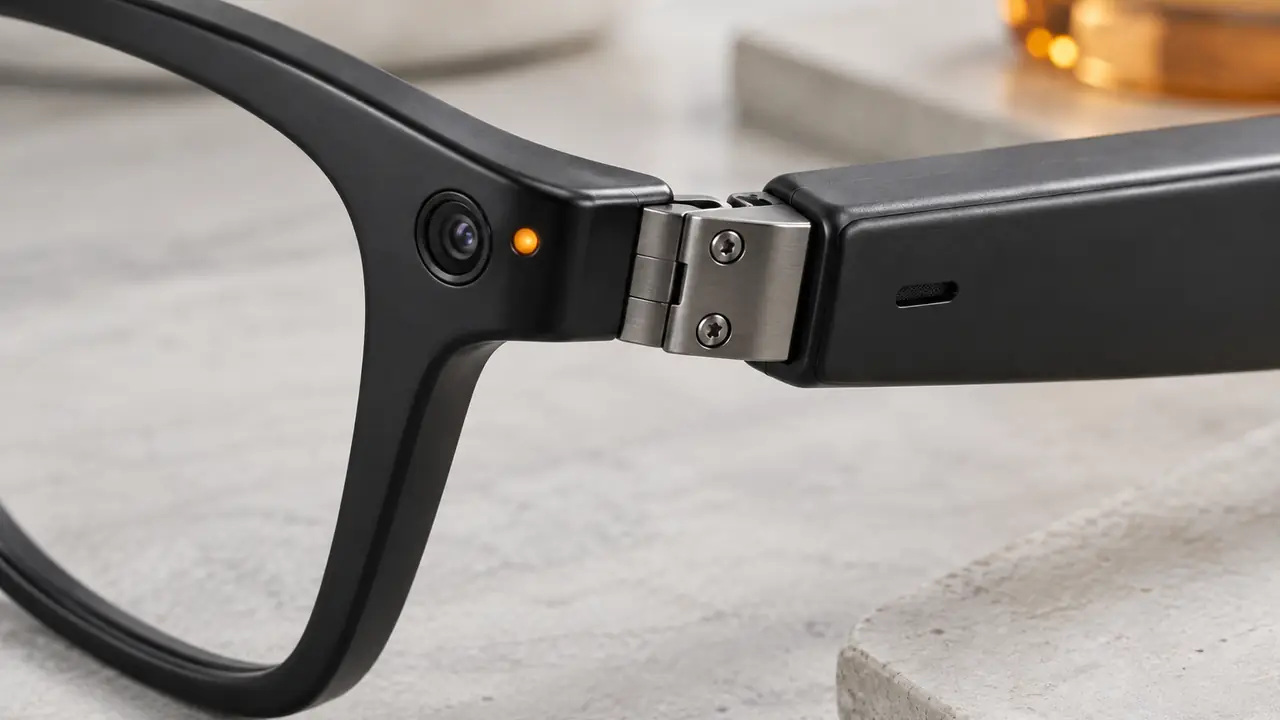
| Hinge and flex | Hinge type and flex cable routing through the hinge | Flex fatigue, one temple going silent, loose hinge | Hinge open-close cycles and temple bend test as stated working default, confirmed per order |
| Board and chipset | BT 5.2-5.4 audio SoC, multipoint, codec set per firmware | Pairing drops, left-right sync issues, update failures | Bluetooth version, codecs per firmware, OTA method, Bluetooth SIG listing |
| Battery and charging | Cell size and placement, 85-235 mAh across both temples, magnetic pogo contacts | Runtime below claim, corroded contacts, swollen cells | Capacity per cell, runtime test method, IEC 62133-2, UN 38.3 summary |
| Audio or imaging | Open-ear speaker chamber, bone conduction transducer or camera module | Sound leakage, low volume, camera indicator not visible | SPL per manufacturer, frequency response and leakage test, indicator LED behaviour |
| Mics, controls and app | Mic count and ENC, touch sensitivity, white-label app and data permissions | Poor calls in wind, touch misfiring, app permission complaints | Mic layout, noise reduction per firmware, EN 18031 scope, app data list |
Each row has a detailed page in this section; the cards below open them.
Six engineering topics
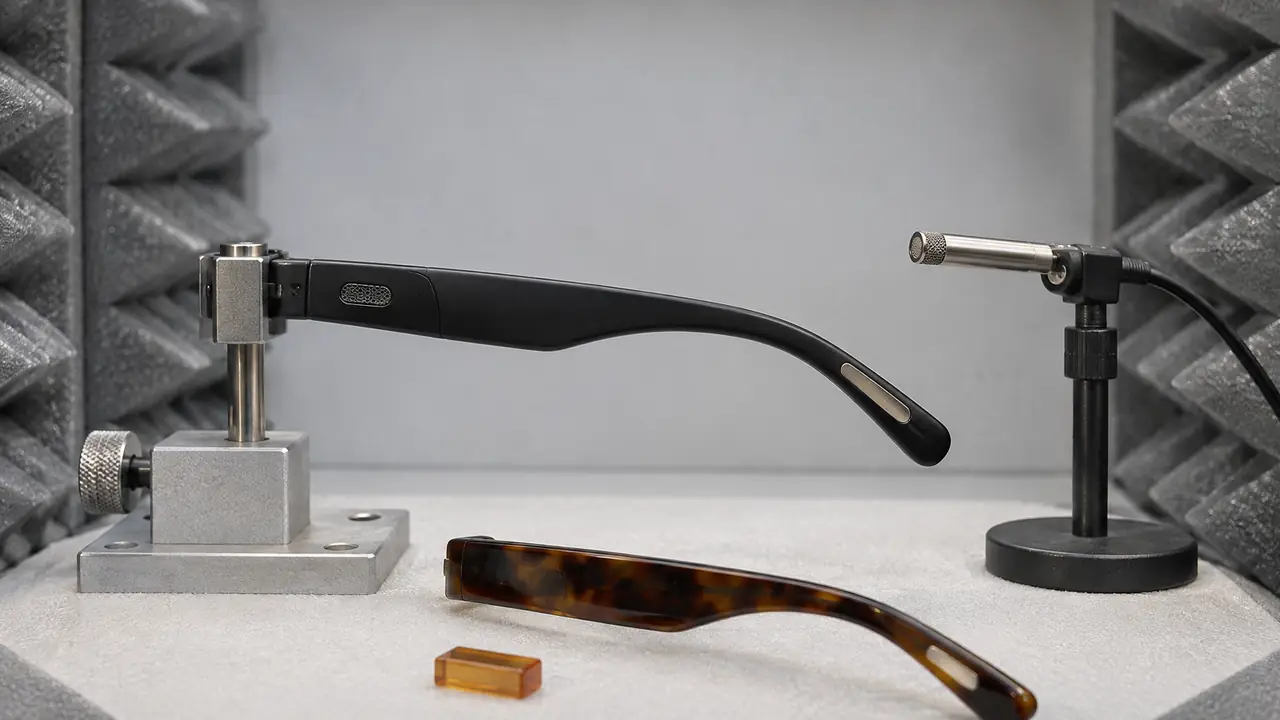
- Acoustic design - open-ear speaker chambers, anti-phase leakage control, bone conduction transducers and how frequency response and leakage are tested.
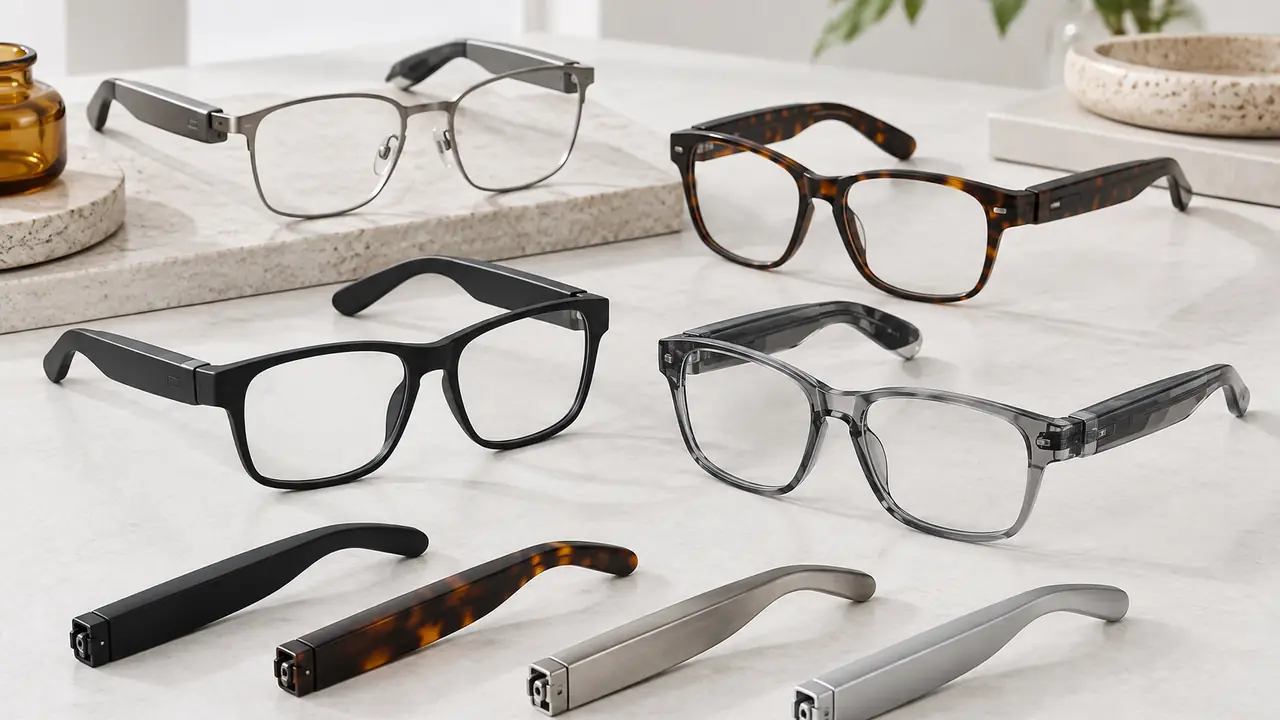
- Frame materials - TR90, acetate, titanium and aluminium, injection moulding versus CNC, hinges with flex circuits and surface finishes.
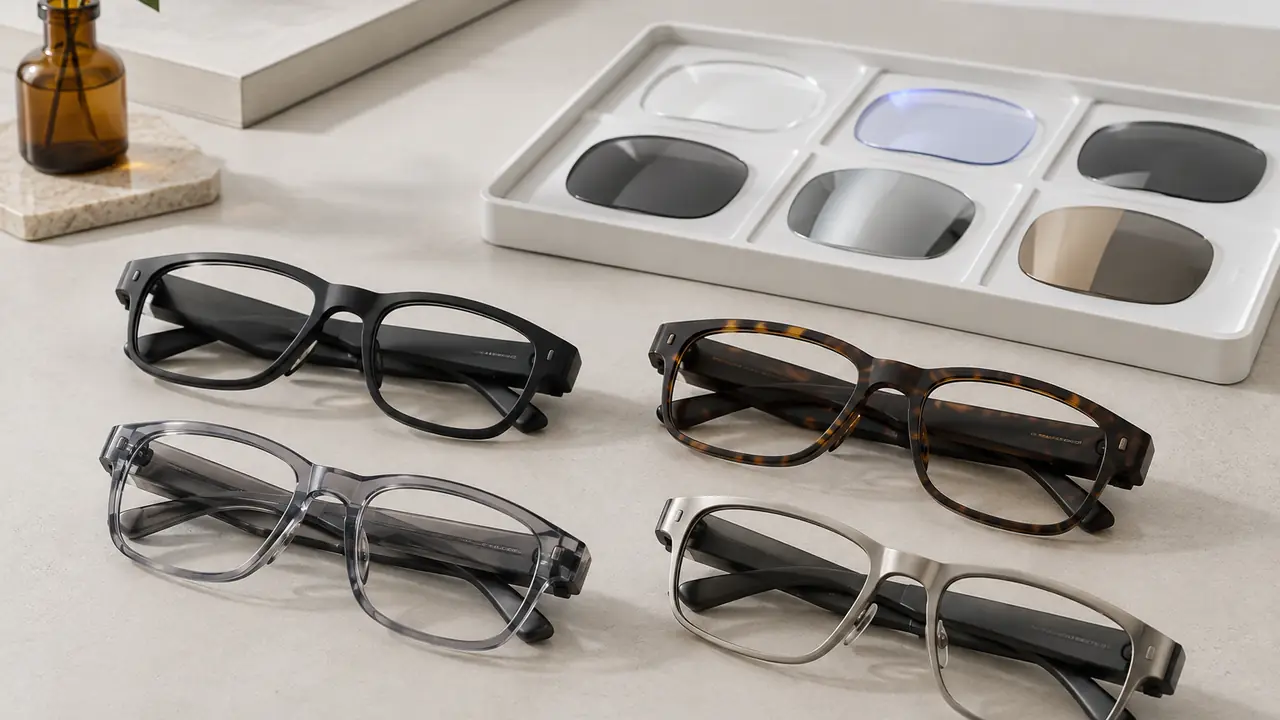
- Lens options - clear, blue-light filtering, polarized, photochromic and prescription lenses, and the optical standards that apply.
- Battery and charging - cell placement and balance, magnetic pogo charging, charging cases and the battery safety and transport rules.
- Firmware and app - chipset generation, multipoint, codecs, OTA updates, app white-label, EN 18031 cybersecurity and data permissions.
- Camera module - sensor resolution, field of view, video, storage and transfer, and the recording indicator design that privacy guidance now expects.
How engineering moves through the sample stages
A catalog program inherits the engineering of an existing model, so the work is mainly verification: does the sample meet the spec sheet, and does the test plan pass. A full OEM or ODM program goes through the staged path common in consumer electronics.
- Engineering sample: first assembly of the new front, temple shell or board, used to check fit, acoustics and antenna performance.
- EVT (engineering validation test): the design is frozen enough to run function and reliability tests on a small build.
- DVT (design validation test): parts from production tooling, full test plan including hinge cycling, sweat soak, drop and IP spray, plus pre-scans for certification.
- Golden sample: the reference unit signed by both sides; inspection at the end of batch production is judged against it.
Typical ODM engineering samples take 30-60 days including 25-45 days of tooling, and full OEM batches 45-75 days excluding certification queues. These are reference ranges, confirmed in writing per program on MOQ and lead time. The production side of the same path is described on production process.
What the desk checks, and what stays with the lab
The desk reviews drawings and spec sheets, runs the sample comparison and writes the order-level test plan: Bluetooth radio and EMC, RF exposure assessment, UN 38.3 and IEC 62133-2 for cells, UV400 and transmittance category for lenses, drop-ball impact, hinge open-close life, temple bend, salt spray, artificial sweat soak, IPX spray, drop, charging contact insertion life, speaker response and leakage, call noise reduction, runtime and standby, and firmware stability including OTA. The number of cycles and the pass criteria for each item are a stated working default and are confirmed per order, not fixed figures.
The inspection side is covered on testing and inspection and quality control. When your brief includes a new frame, a new acoustic target or an app white-label, send it through the quote form and say which modules you want to change.