
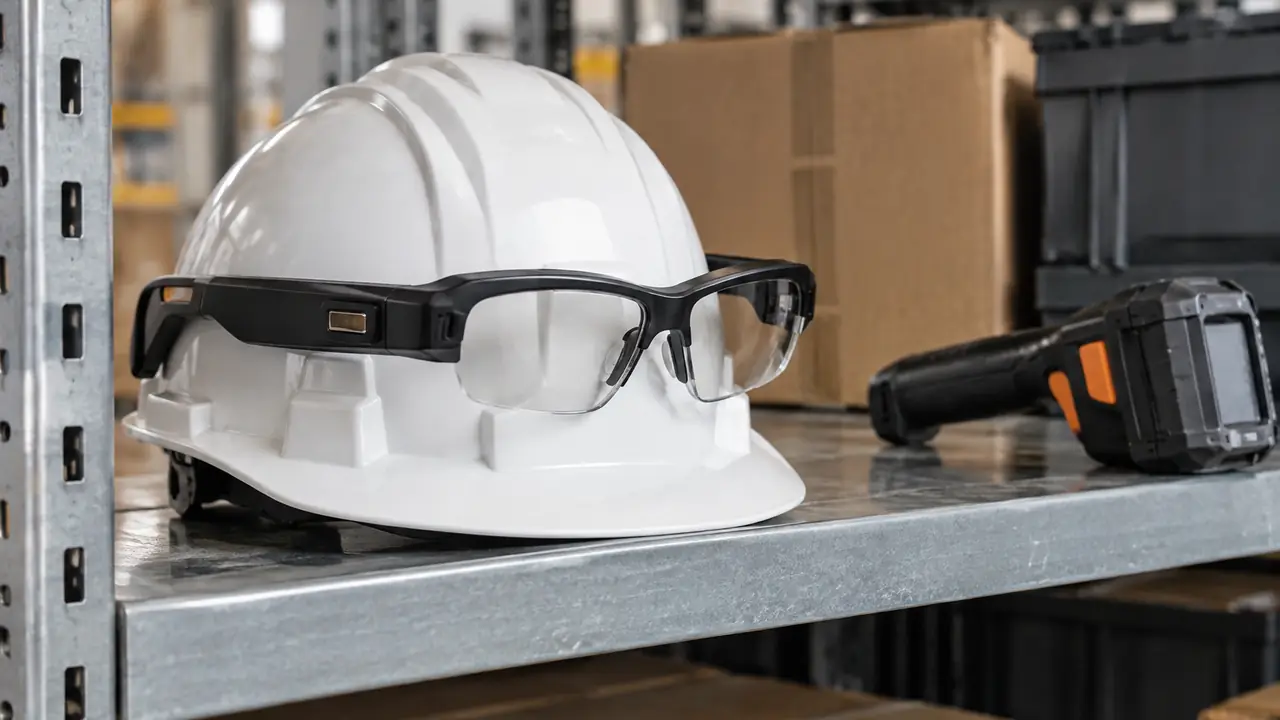
What field teams need from smart glasses
In a warehouse, a logistics yard or on a service visit, the value of smart glasses is simple: a voice channel that works with both hands busy. A picker can take a call from a supervisor while handling cartons; a technician can talk to a remote colleague while holding a tool; a site lead can stay on a group call while walking a floor. For an enterprise buyer, however, the purchase is not a single pair but a fleet - dozens or hundreds of identical units that must survive shift work, charge overnight in bulk, run the same firmware and be repairable without replacing the whole pair.
That changes the brief. Consumer features matter less; durability, charging logistics, firmware control and spare parts matter more. The base hardware is usually the business call line, with the developer line where the buyer needs integration with its own systems.
Fleet specification at a glance
| Fleet need | Spec to set | Test or document |
|---|---|---|
| Hands-free calls in noise | Dual or quad mic ENC per firmware, open-ear speakers | Call recordings in defined site noise |
| Shift durability | Reinforced hinge, TR90 or PC front, sealed contacts | Hinge cycling, temple bending, drop, spray to rating |
| Dust and splashes | IPX4-IP55 rated build per test | Test report per IEC 60529 |
| Overnight charging | Multi-unit charging with magnetic pogo cables or cases | Contact insertion life, case battery per Wh |
| Same firmware on every unit | OTA with version control per project | Firmware stability and OTA test, version log |
| Repair without replacement | Spare fronts, temple sleeves, nose pads, cables | Spare parts list and quantities per order |
Durability for shift work
Field units are put on and taken off dozens of times a shift, pushed into pockets and dropped onto concrete. The weak points are known: the hinge, which carries the flex cable to the far temple; the charging contacts, which see dust and sweat; and the front, which takes the impact in a fall. Partner plants address these with reinforced hinges, PC or TR90 fronts, sealed and plated pogo contacts and gaskets at the temple seams. The order-level test plan for a fleet usually extends hinge cycling and drop counts beyond a consumer plan and adds salt mist on metal parts for outdoor or coastal sites. Water resistance across the category is stated per IPX4 to IP55 rating, tested per IEC 60529. Test counts and pass criteria are a stated working default, confirmed per order on testing and inspection.
Bulk charging and batteries
A fleet has to charge in one place overnight, often in a single cabinet or rack. The options are multi-port chargers with magnetic pogo pin cables, or charging cases with their own battery. Cases are convenient but add a separately rated battery, so each case is assessed per Wh and shipped under UN 38.3 with a test summary; spare cases shipped on their own are assessed under UN3480 or UN3481 per Wh, which the forwarder confirms. Across the audio lines, charging takes 1 to 2 hours on magnetic contacts and call time runs about 3 to 9 hours, so the buyer should check one charge covers a full shift. Charging hardware is covered on battery and charging.
Firmware control across a fleet
Consumer glasses update whenever the app prompts. An enterprise fleet needs the opposite: every unit on the same approved firmware, updates only after the buyer has tested them, and a way to roll back. The desk agrees with the partner plant per project how firmware versions are released, logged and pushed over the air, and whether the buyer's IT team can control updates. For integration with in-house systems, developer boards offer an SDK, BLE GATT access and serial debugging per solution provider. In the EU, the cybersecurity requirements of the Radio Equipment Directive under EN 18031 apply to glasses from 1 August 2025, which makes update policy part of the compliance file. More in firmware update failures.
Accessories, spares and the program route
Fleets break parts, not whole pairs. A spare parts plan typically covers fronts, nose pads, temple sleeves, charging cables and cases, with quantities fixed per order. Replacement parts are listed on smart glasses accessories, with accessory minimums of typically 500-1,000 pieces. A fleet with a logo starts at typically 500-1,000 pairs per model, with samples in 10-15 working days and batch production in 20-35 days; custom tuning or firmware work moves to full custom at typically 3,000 pairs per model. Figures are typical reference ranges, confirmed in writing for each program on MOQ and lead time. Send your site conditions, fleet size and IT requirements on the quote form.