
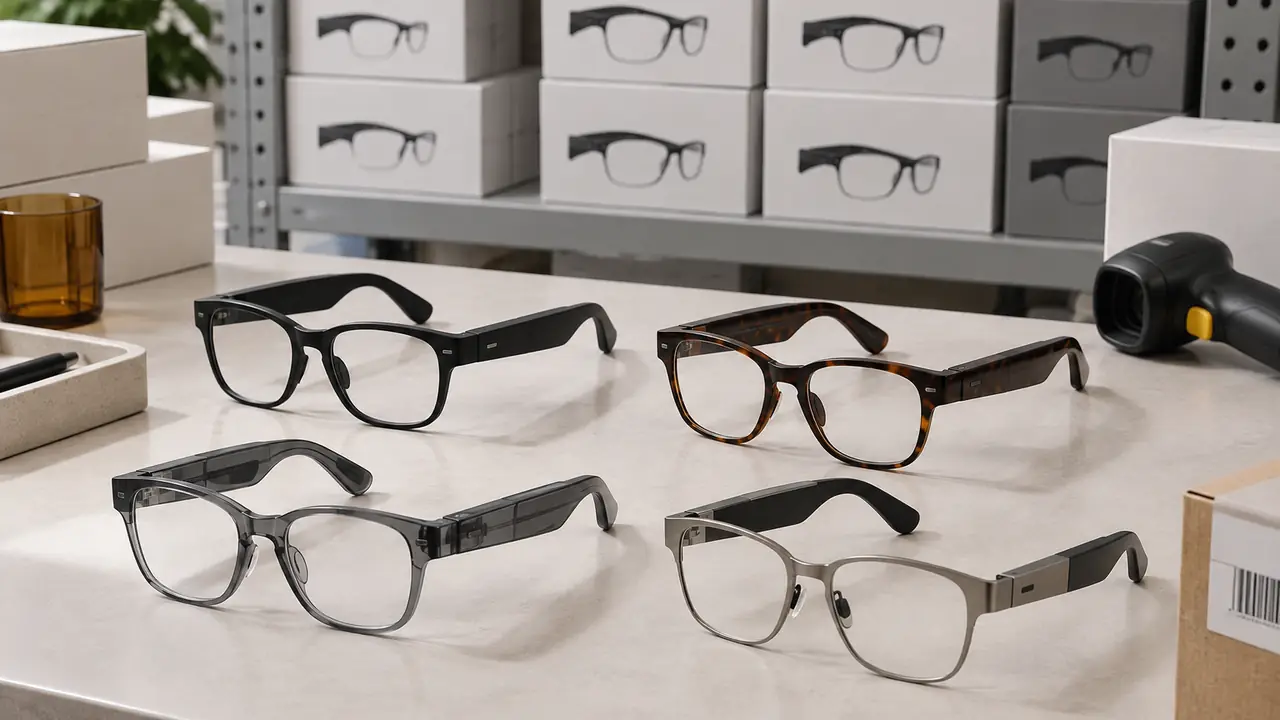
What a smart glasses warranty has to cover
A warranty for smart glasses covers two products in one frame. The eyewear half wears in familiar ways: nose pads harden, temple tips loosen, lenses scratch. The electronic half fails in different ways: charging contacts corrode, flex cables in the hinge fatigue, cells lose capacity, firmware misbehaves. A useful warranty separates the parts that wear by design from the faults that indicate a defect, and states both plainly.
Statutory consumer rights differ by market and sit underneath any warranty a brand offers, so the brand's terms should be written to sit on top of them rather than replace them. Confirm the minimum requirements for each market with counsel before printing terms on the box or the listing.
Coverage and exclusions
Most smart glasses warranties follow a similar structure. The table below shows how brands commonly treat each area; the specific terms are the brand's decision, written per market.
| Area | Common treatment | Why |
|---|---|---|
| Board, chipset, speakers, microphones | Covered for the warranty period | Failures here usually indicate a defect, not wear |
| Battery | Covered for failure; gradual capacity loss described separately | All lithium-ion cells lose capacity with cycles and heat |
| Hinge and flex cable | Covered for defects; damage from drops or forcing excluded | Fatigue and impact damage look different on inspection |
| Charging contacts | Covered for defects; corrosion from misuse may be excluded | Sweat and moisture beyond the tested rating corrode contacts |
| Nose pads, temple tips, lenses | Treated as wear parts, sold or supplied as spares | They wear in normal use |
| Water exposure | Covered within the tested rating only | Ratings such as IPX4 or IP54 per IEC 60529 describe splash and sweat, not immersion |
Battery wording deserves care. Capacity fades with charge cycles, heat and time, so a pair that runs noticeably less after a year of daily use is usually working as expected. Stating that clearly, and explaining how to store the glasses, prevents many disputes; the background is in battery aging in wearables.
The spare parts list
Spare parts let the brand or its distributors solve wear and minor faults without replacing the whole pair. Because smart glasses electronics are sealed, the spares list is mostly external parts plus a pool of complete pairs.
| Part | What drives demand | Stocking approach |
|---|---|---|
| Magnetic charging cable | Loss and connector wear | Highest-volume spare; also sold as an accessory |
| Nose pads and temple tips | Wear, hygiene, fit changes | Sets per frame style |
| Replacement lenses or fronts | Scratches, change of tint, Rx changes | Per frame shape and lens type |
| Pouch or case | Loss | Small stock, sold as an accessory |
| Hinge screws | Loosening in use | Small kits where the design is serviceable |
| Complete replacement pairs | Board, battery or flex failures | Pool per model and colour, sized from return data |
Many of these parts double as accessories, which makes stocking easier: the same cables, lenses and cases serve warranty claims and paid replacement. Charging cable wear and contact care are covered in magnetic pogo pin charging, and hinge failure modes in hinge breakage in smart glasses.
Sizing spares and the plant agreement
There is no universal spares ratio. A reasonable approach is to order a modest spares set with the first batch, log every claim by batch and confirmed fault, and adjust the second order to match what actually happened. Cables and wear parts are cheap to over-order; complete replacement pairs tie up stock and age on the shelf, so they are worth sizing more carefully.
The claim process itself should be light. A customer or distributor reports the fault, support runs the decision tree, and only cases that survive the basic checks - charging on a known good cable, pairing after a reset, a current firmware version - become warranty claims. For those, a photo or short video of the fault and the batch code on the temple are usually enough for the brand to approve a part or a replacement. Returned pairs from approved claims are then checked to confirm the fault, which feeds the batch log and keeps the spares estimate grounded in real data rather than guesses. Keeping the evidence requirement simple also shortens the time a customer waits, which tends to matter more to reviews than the length of the warranty itself.
The supply agreement with the partner plant should cover the warranty side as well: how confirmed defects within the brand's warranty period are handled, whether replacement units or parts are supplied with each batch, what evidence the plant needs for a claim, and how systematic defects found after delivery are investigated. These terms, including any allowance for defective units, are stated working defaults, confirmed per order. The desk keeps them in the program file next to the inspection records, so that a claim can be traced back to the batch and its inspection.
Revision control and long-term spares
Smart glasses programs change during their life. A second batch may use a revised board, a new cell supplier or updated firmware; a front may be re-tooled. Each change can break compatibility with spares already in stock. Three controls keep this manageable:
- Revision marking. Each batch carries a revision code on the pair and carton, recorded with the spec sheet version.
- Compatibility notes. When a part changes, the spec sheet states which earlier batches the new part fits.
- End-of-run spares. Before a model is discontinued, a final spares order covers the remaining warranty period.
Spare pairs and spare cells need storage care: lithium-ion stock is best kept cool and partly charged and checked periodically. Stored replacement pairs that sit at full charge in a warm warehouse arrive at customers with reduced capacity. Batteries in Europe also fall under the EU Battery Regulation 2023/1542; confirm the obligations that apply to your products and spares with counsel.
Distributors, regions and getting started
When distributors handle warranty in their region, the brand needs to supply the terms, the decision tree, a spares stock and a reporting format, as covered on distributors. Regional stock reduces turnaround but adds inventory, so many brands keep cables and wear parts with distributors and hold replacement pairs centrally. Spare parts and accessories typically start at 500 to 1,000 pieces, confirmed in writing for each program on MOQ and lead time. Add warranty and spares to your program brief through the quote form so they are ordered with the first batch rather than after the first claim.