
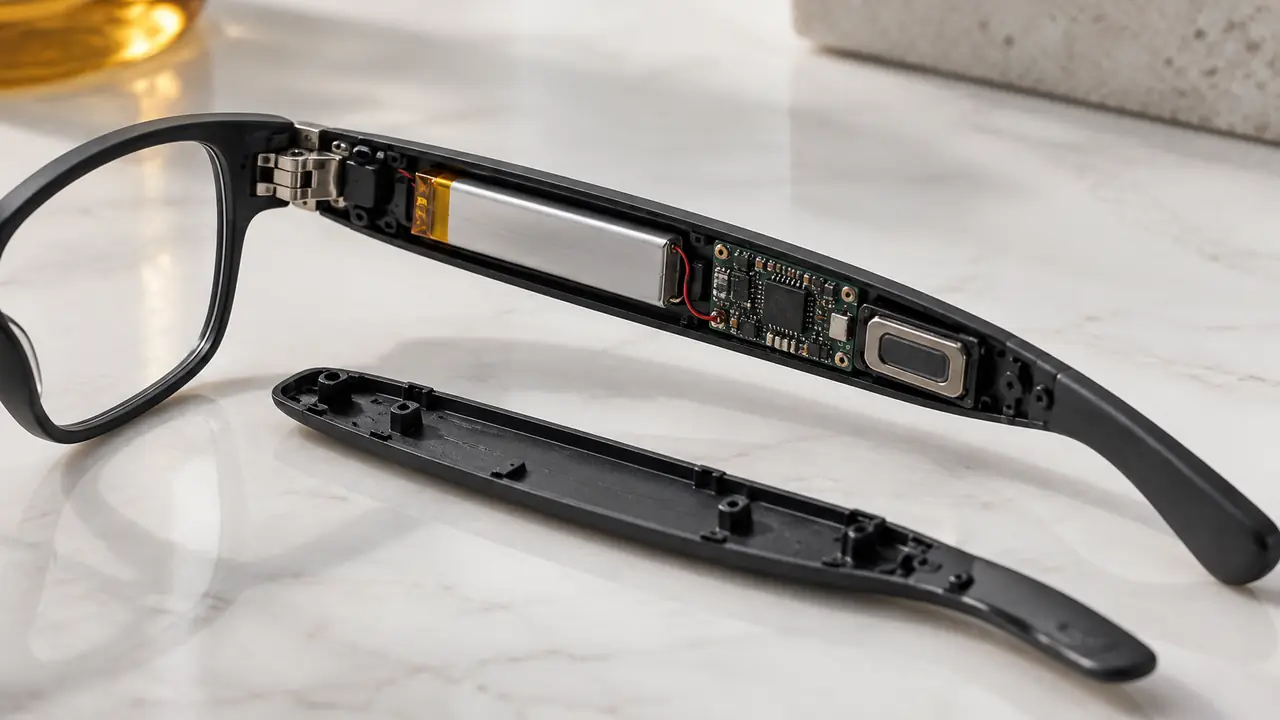
The three numbers and what they measure
Eyewear sizes are written as three numbers, for example 52-18-145, usually printed on the inside of a temple. The first is the lens width in millimetres, measured across one lens at its widest point. The second is the bridge width, the gap between the two lenses where the frame sits on the nose. The third is the temple length, from the hinge to the tip behind the ear. Some spec sheets add the lens height and the total frame width, which together describe how large the front looks on the face.
| Measurement | Where it is measured | Typical range | What it changes |
|---|---|---|---|
| Lens width | Horizontal width of one lens | 48-56 mm | Front width and look; overall face coverage |
| Bridge width | Gap between the lenses at the nose | 16-20 mm | Where the pair sits on the nose; slipping or pinching |
| Temple length | Hinge to the end of the temple | 140-150 mm | Grip behind the ear; where the battery weight sits |
| Lens height | Vertical height of one lens | Per model | Field of view; room for Rx lenses |
| Total frame width | Hinge to hinge across the front | Per model | Fit on narrow or wide faces |
A frame at 52-18-145 sits in the middle of these ranges and fits a broad group of adult wearers, which is why many catalog models use a size close to it. The prescription smart glasses line lists its typical card size in the same format.
Why smart glasses sizes are less flexible
In ordinary eyewear, a frame family can be offered in two or three sizes with little extra cost. In smart glasses, the temple holds a board, a battery and a speaker or camera, and the speaker has to sit at a specific point in front of the ear. Changing the temple length moves that point and can change the acoustic result; changing the front width changes the hinge geometry and the path of the flex circuit. As a result, many catalog smart glasses are offered in one size, and a second size is usually a custom program with its own tooling.
That has a commercial consequence. Fit problems that ordinary eyewear solves by adding sizes must be solved in smart glasses by choosing the right single size, by adjustable parts and by clear sizing information for the end customer. Adjustable nose pads, spring hinges, temple tips that can be warmed and bent by an optician, and temple sleeves widen the fit window of one size considerably.
The speaker position deserves a separate check. On open-ear designs the speaker port should sit just in front of the ear opening; if the temple is too long for the wearer, the port moves forward and the sound gets quieter and leaks more; if it is too short, the port can press on the ear. Bone conduction designs depend on the transducer resting on the right area of the side of the head. So when a buyer reviews a size, it is worth asking not only whether the frame feels comfortable but also whether the sound reaches the ear as intended across the head sizes of the target group. Quiet sound complaints often turn out to be sizing problems.
Matching sizes to buyers and markets
Different channels need different size strategies. An optical retailer wants a fitting conversation and can adjust frames on site; a marketplace seller needs a size that suits the widest group without fitting, plus a clear size chart on the listing; a kids program needs smaller fronts and shorter temples, usually with a lighter TR90 or silicone build under 30 grams per model. Face shapes and typical sizes also vary between markets, so a range planned for one region may need a wider or narrower option elsewhere.
- Wide faces: look for a larger lens width toward 54-56 mm, a longer temple toward 150 mm and spring hinges that reduce pressure at the sides.
- Narrow faces and low nose bridges: a narrower bridge toward 16 mm, adjustable or raised nose pads and a lighter front reduce slipping.
- Sports use: wrap fronts change the effective width; check the fit with helmets and caps. See sports smart glasses.
- Kids: smaller fronts, shorter temples and soft materials; check the size against the age group the product is marketed to, as covered on kids smart glasses.
How to measure and verify a sample
- Read the printed size on the sample temple and check it against the spec sheet.
- Measure with a ruler or caliper: lens width at the widest point, bridge at the narrowest gap, temple from the hinge screw to the tip along the curve.
- Measure the total frame width across the hinges; this is often the best single guide to whether a pair suits a narrow or wide face.
- Try it on a wear panel covering the head sizes of your target customers, and note where the speaker sits relative to the ear opening.
- Record tolerances on the spec sheet so that batch inspection can check them; tolerance values are a stated working default, confirmed per order.
Planning a size range for a first order
For a first season, most brands choose one size close to the middle of the range and make it more forgiving with adjustable parts. A second size becomes worthwhile when sales data or reviews show a clear group of wearers left out, or when an optical or kids channel needs it. Because a new size usually means a new front or temple mould, it follows the full custom path: engineering samples typically take 30-60 days including 25-45 days of tooling, and full custom builds typically start from 3,000 pairs per model, confirmed in writing per program on MOQ and lead time.
Sizing information is also listing content. A short size chart with the three numbers, total frame width and the weight helps customers self-select and reduces fit returns; see smart glasses listing content. Frames for these programs come mainly from the Shenzhen Henggang and Wenzhou Ouhai eyewear clusters, and the desk aligns the frame size with the temple electronics from Shenzhen before tooling is opened. Send your target channel and size requirements through the quote form.