
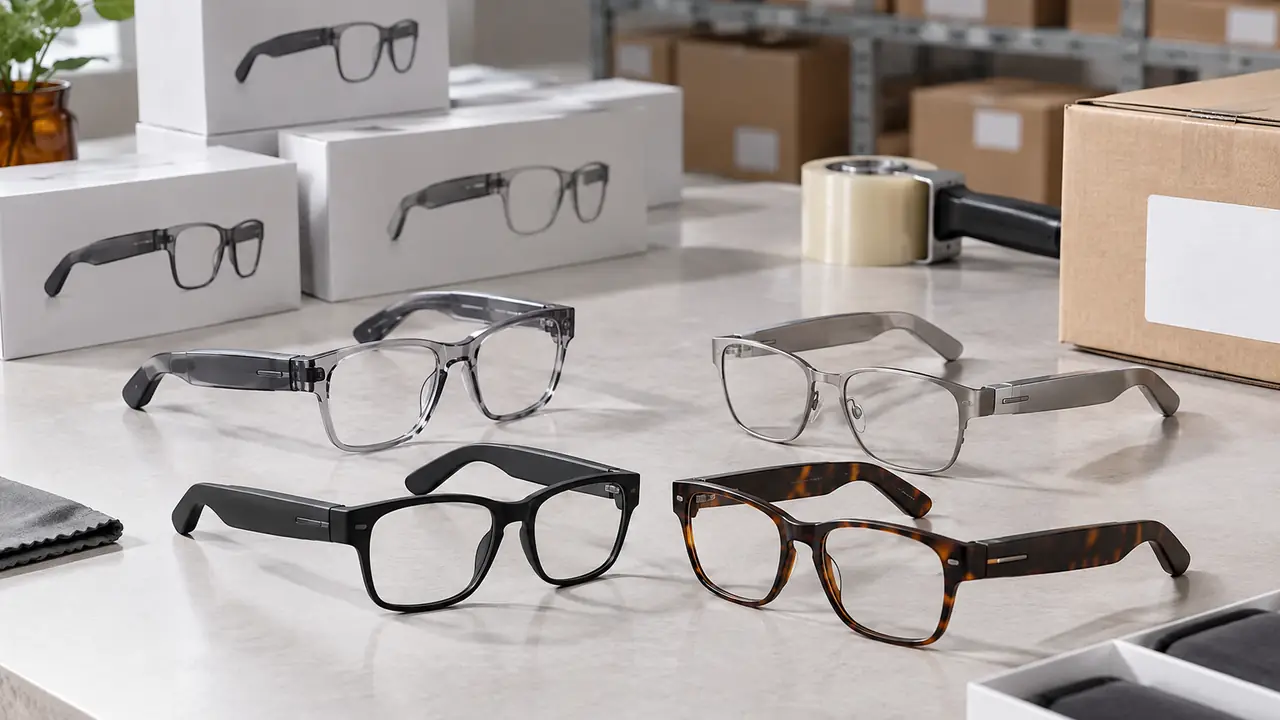
The three problems that stop marketplace sellers
Marketplace sellers face a different gatekeeper than other buyers: the platform itself. Three problems account for most stalled launches and lost listings in the smart glasses category.
- Radio compliance on the listing. Major marketplaces increasingly ask for the FCC ID of any Bluetooth device sold into the United States, and they check that the ID on the listing, the label on the product and the grant in the FCC database match. A catalog model whose grant sits under an unrelated name, or whose label shows a different model number, invites a takedown.
- Lithium battery transport and storage. Every pair contains lithium-ion cells, so fulfilment warehouses classify the product as dangerous goods for storage and the carrier needs the right declaration. Without a UN 38.3 test summary and a safety data sheet that names the exact model, inbound shipments can be refused or held.
- Negative reviews. Across the category, the usual review drivers are pairing drops and failure to reconnect, short runtime against the listing claim, fit that is too tight or loose, sound leakage in quiet rooms and hinge breakage after a few months. Each of these can be tested before shipment.
Recommended lines and why
Bluetooth audio glasses are the natural first listing: no camera, a simple certification route and battery cells well inside the PI 967 Section II limits. Sports smart glasses add a wrap front, grip nose pads and water resistance per IPX4-IP55 rating tested per IEC 60529, which suits seasonal search demand. Accessories such as replacement lenses, magnetic charging cables and cases build basket size and reviews; note that a charging case with its own battery is classified per Wh under UN3480 or UN3481 and needs its own battery file.
Order routes and quantities
Marketplace sellers usually start small and scale on data. A catalog model at 50-500 pairs per model tests the listing; a logo program at 500-1,000 pairs per model follows once the review profile is clear. Ranges are typical across the category and confirmed in writing per program.
| Item | What to check before listing | Where it comes from |
|---|---|---|
| FCC ID | Grant exists, model number and label match the listing | FCC Part 15.247 grant, held by plant or brand per project |
| Part 15 statement | Printed in the manual and on the label where required | Part 15 Subpart B report |
| Bluetooth listing | Declaration ID covers the product | Bluetooth SIG qualification |
| Battery file | UN 38.3 summary and safety data sheet name the exact model and Wh | Cell and pack test lab |
| Carton marks | Lithium battery mark, carton weight and label position | Packing spec agreed with the desk |
| EU listings | CE under RED with EN 18031, battery labelling, GPSR contact | Test lab and importer of record |
Warehouse and carrier rules change, so confirm current requirements with your fulfilment provider and forwarder before booking. The general shipping rules are on logistics and shipping.
Battery shipping in practice
By air, glasses with batteries inside ship as UN3481, lithium-ion batteries contained in equipment, under PI 967 Section II when each cell is at or below 20 Wh and each battery at or below 100 Wh; smart glasses cells sit far below these thresholds. On passenger aircraft each package is limited to 5 kg net of lithium batteries, packages carry the lithium battery mark and the air waybill carries the declaration. IATA recommends a state of charge of 30 percent or less for this category, as a recommendation rather than a requirement under PI 967. Express and air usually take 5-10 days; sea freight runs about 15-25 days to the US west coast and 30-45 days to Europe. More detail is in shipping batteries in wearables.
Inspection aimed at reviews
- Label check: FCC ID, model number and Part 15 text match the grant and the listing draft.
- Pairing, reconnection and multipoint switching on two phone platforms, per firmware.
- Runtime spot check against the figure you plan to list, per spec sheet.
- Hinge cycling sample and sweat soak on charging contacts.
- Carton drop, lithium mark and carton weight against warehouse limits.
Illustrative case: from takedown risk to a clean relaunch
This is an illustrative, anonymous example. A marketplace seller had a listing paused because the FCC ID on the product label did not match the model name in the listing. The desk traced the grant to the plant's original model, arranged a re-label run with the correct model name and Part 15 text, and assembled a battery file with the UN 38.3 summary and safety data sheet for the exact SKU. For the next batch, review notes about reconnection were turned into a reconnection check on sampled units from every carton at pre-shipment inspection, and the runtime claim on the listing was rewritten to the per spec sheet figure. Start a similar program through the quote form.