
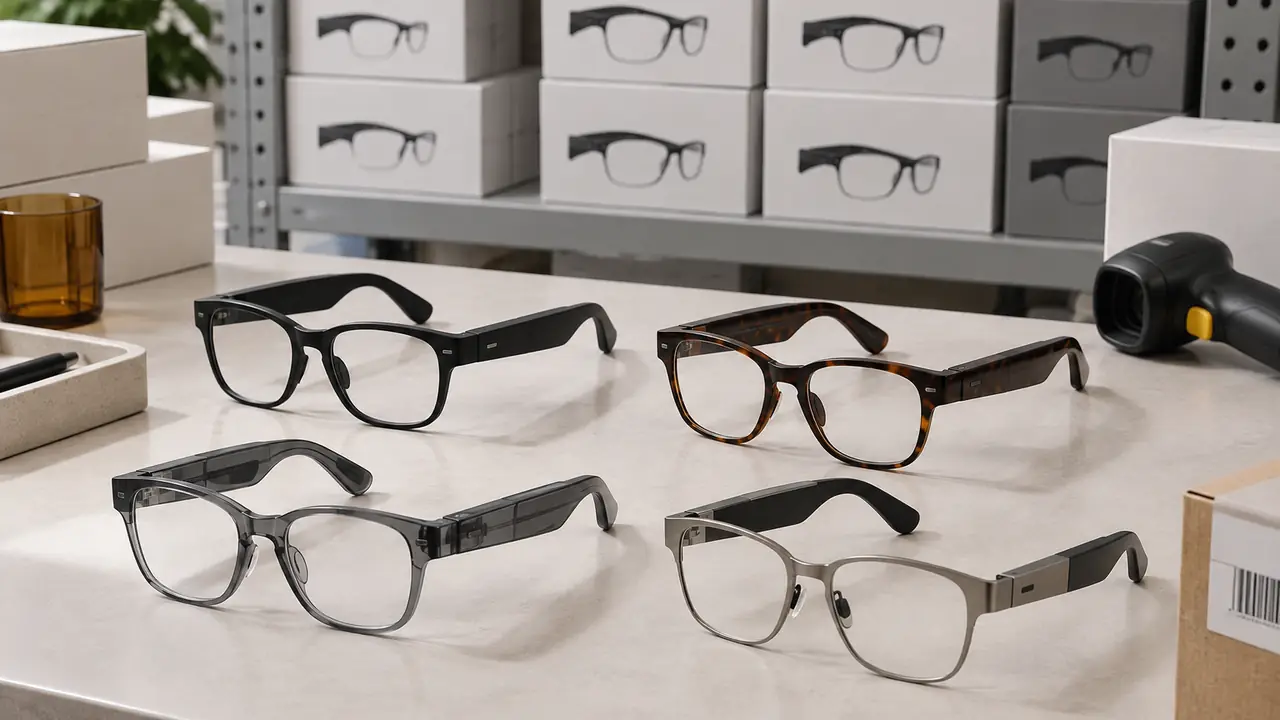
Why optical retail suits smart glasses
A large share of adults wear prescription glasses, and many of them cannot use most smart glasses unless the frame takes prescription lenses. Optical retailers already have what the category needs: a lens lab relationship, staff who measure and adjust frames, and customers who come in for exactly that service. For the retailer, smart glasses add an electronics product that sells with a lens order rather than instead of it.
The fit matters as much as the electronics. A pair that sits too far from the ear moves the speaker away from where it was tuned; a pair that is too tight is returned within days. An optician who fits the frame properly solves two problems at once, which is why optical channels tend to see fewer fit-related returns than direct sales.
There is a commercial difference too. A customer who orders prescription lenses for a smart frame is committing to the pair for longer than a shopper who buys audio glasses off a shelf, and the lens order is usually the larger part of the sale. That changes the after-sales conversation: if the electronics fail within the warranty period, the customer wants to keep the lenses. Programs for optical channels therefore benefit from designs where the electronic temples can be swapped while the Rx front stays in place, or where replacement pairs share a front shape so that the lab can re-edge or transfer lenses. These points are worth raising with the partner plant before the range is fixed, because they depend on how the hinge and flex cable connect the front to the temples.
How smart frames differ in the optical workflow
An Rx-ready smart frame follows the familiar dispensing steps, but the electronics change what can be done at several of them. The table compares the two.
| Step | Standard frame | Smart frame |
|---|---|---|
| Frame selection | Wide choice of sizes and shapes | Fewer sizes; lens width 48-56 mm, bridge 16-20 mm, temple 140-150 mm typical |
| Lens ordering | Lab edges lenses to the front | Same, using the front's shape data; lens range per frame and lab |
| Lens fitting | Front may be heated or flexed | Fitting method per frame design; heat must stay away from temples and hinge |
| Temple adjustment | Heat and bend along the length | Only in zones the partner plant marks as adjustable; electronics zones are not bent |
| Handover | Fit check and care advice | Fit check, pairing, charging and app setup |
The practical rule is that the electronics live in the temples, so temple adjustment is limited to the tips and to any zone the frame design marks for it. The partner plant's fitting guide should state which areas can be heated or bent and to what extent. The step-by-step lens route is in prescription lenses for smart frames.
Lens options and the lab relationship
Rx-ready fronts are designed so that a lens lab can edge prescription lenses to their shape. The prescription range depends on the frame's lens size and groove and on the lab's capabilities, so it is stated per lab rather than per frame alone. Some designs use interchangeable or magnetic fronts, which let the customer keep the electronic temples and change between a clear Rx front and a sun front.
- Clear Rx lenses for everyday wear, the most common order in optical channels.
- Photochromic lenses, which darken outdoors per lens spec, popular with customers who want one pair; see photochromic and AR glasses.
- Polarized sun lenses for outdoor and driving use, within the filter categories allowed for driving.
- Blue-light filtering lenses, offered as a lens option with no health claim.
Stock lenses in a smart frame from the partner plant are tested to the relevant optical standard - ISO 12312-1 for sunglass lenses in Europe, ANSI Z80.3 for non-prescription eyewear in North America. Prescription lenses fitted by the retailer's lab fall under the dispensing rules of each market. In the US, eyeglass and sunglass lenses are subject to the drop ball impact test under 21 CFR 801.410, covered in the drop ball test note. Who tests and certifies what in your market should be confirmed with your lab and counsel.
Fitting, handover and staff knowledge
Dispensing staff already know how to measure and fit. What they need for smart glasses is a short addition to their routine, usually five points:
- Measure and choose the size using the frame's millimetre data and the lens and frame fit guide.
- Check speaker position: with the frame fitted, the speaker opening should sit just in front of the ear.
- Adjust within the marked zones - nose pads and temple tips - and never heat the electronic sections.
- Pair and set up at handover: pair with the customer's phone, install the app, check the firmware version and show charging.
- Explain care: cleaning the charging contacts, storing in the case and the water resistance rating as tested, for example water-resistant per IPX4 rating tested per IEC 60529.
Handover takes a few minutes longer than for an ordinary frame, but it prevents most of the early questions customers would otherwise bring back to the store. In-store display and try-on are covered in smart glasses in retail.
A range suited to optical channels
Optical retailers usually do best with a small range built around fit and lenses rather than features: one or two Rx-ready audio models in classic shapes, a business call model for office customers, and photochromic or interchangeable-front options. Two frame sizes per shape, where the plant offers them, help more than extra colours. Camera and display models are a separate decision; they bring privacy questions and heavier frames that many optical customers do not want for all-day wear.
Logo and packaging programs for retailers typically start at 500 to 1,000 pairs per model; catalog Rx-ready models can start at 50 to 500 pairs per model, and replacement fronts and lenses as accessories at 500 to 1,000 pieces - reference ranges confirmed in writing for each program on MOQ and lead time. Programs for optical chains often add fitting guides, lens shape data for the lab and staff cards. Retail support is described on retailers, and the quote form accepts your lab requirements alongside the range brief.