
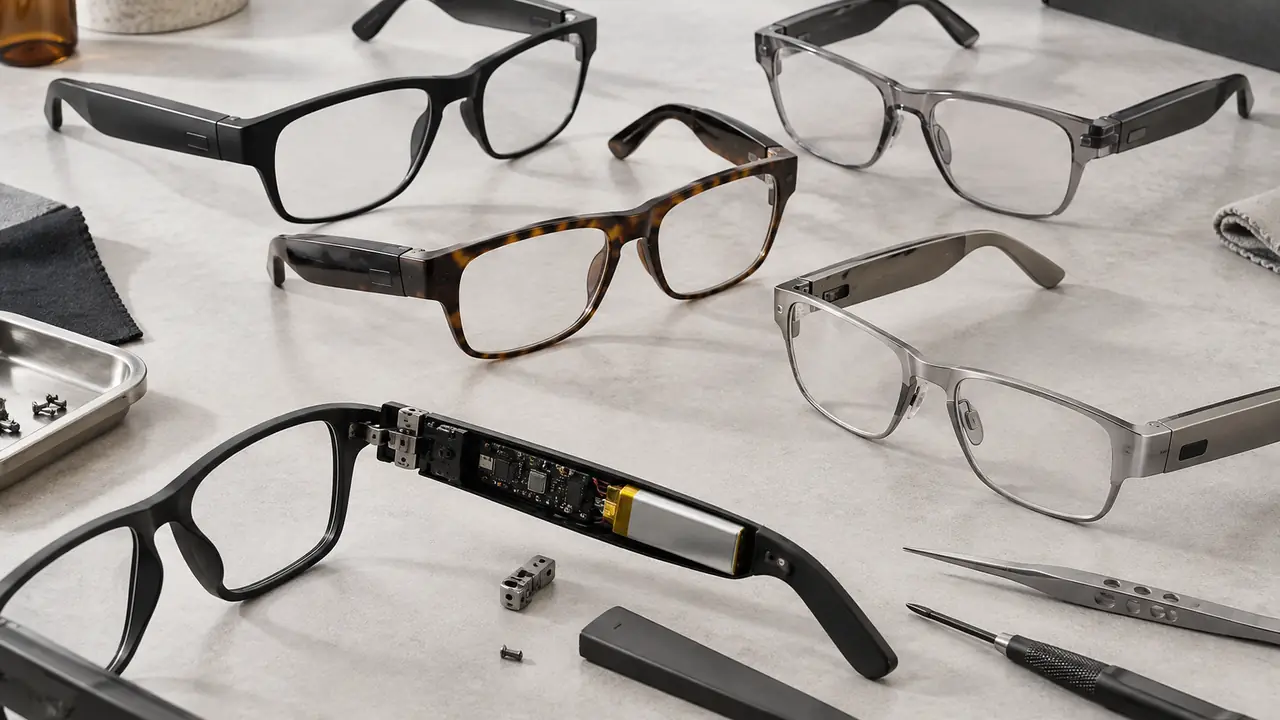
Start with honest return data
Return reduction begins with a reason code that means something. 'Defective' and 'not as described' cover too much to act on. A useful set splits returns into fit and comfort, connection and pairing, sound and calls, charging and battery, durability, controls and app, and change of mind, and asks support teams to record the firmware version, the lot and a short description. With that, a brand can tell which returns are product faults, which are expectation gaps and which are information gaps.
The distinction matters because the fixes are different. Product faults go back to the plant as corrective actions. Expectation gaps are fixed in listing copy, images and packaging. Information gaps - the customer could not pair, did not find the volume control, did not know to dry the contacts - are fixed in the quick-start guide and the app. In smart glasses programs, the second and third groups are often larger than the first.
The five causes at a glance
| Cause | Typical customer words | Main lever | Detail |
|---|---|---|---|
| 1. Fit and comfort | Too tight, slides down, heavy, sits crooked | Size range, accessories, listing dimensions | Frame sizing |
| 2. Connection | Will not pair, keeps disconnecting | Firmware, antenna review, quick-start guide | Pairing and reconnect |
| 3. Sound and calls | Too quiet, others can hear it, callers hear wind | Honest copy, acoustic target, mic layout | Open-ear expectations |
| 4. Charging and battery | Will not charge, battery does not last | Contacts, cable, storage charge, runtime wording | Charging path |
| 5. Durability | Hinge broke, one side dead, contacts corroded | Hinge and flex design, plating, endurance tests | Hinge and sweat |
Controls and firmware issues appear in most programs too, usually folded into connection or sound complaints. They are covered in touch controls misfiring and firmware update failures.
Causes one to three: fit, connection, sound
Fit and comfort
Smart temples are thicker and heavier than ordinary ones, and finished pairs across the category weigh about 27 to 50 grams. One frame size will not fit every head, and optician-style adjustment is limited. The fixes: publish lens width, bridge and temple length on the listing; ship alternative nose pads or temple sleeves; and, as volume grows, add a second front size. The detail is in fit too tight or loose.
Connection and pairing
Many 'will not connect' returns are units still paired to another device, or customers who never found pairing mode. A one-page quick-start with the pairing gesture, the reset gesture and the app download step removes a large share. The remaining share - genuine reconnect bugs and weak antennas - is fixed in firmware and design review, as described in Bluetooth glasses not connecting.
Sound and call expectations
Open-ear audio is lighter in bass and quieter in noisy streets than sealed earbuds, and some sound leaks at high volume. Customers who were not told return the product as 'too quiet' or 'everyone can hear it'. Clear copy - aware listening, open-ear sound, best for moderate environments - sets the right expectation. On the product side, an acoustic target measured on the golden sample and a microphone layout suited to the use case keep real complaints low.
Causes four and five: charging and durability
Charging and battery
Charging returns usually start at the magnetic pogo contacts or the cable, not the cell. Swapping cables, cleaning contacts and agreeing a storage charge at packing all help, as does stock rotation so units do not sit discharged for months. Runtime complaints often reflect the listing: across the category music playback runs 4 to 13 hours and calls 3 to 9 hours, and a figure quoted without its conditions invites disappointment. State the volume and features used for each figure; see standby vs playback time.
Durability
Hinge and flex failures, corroded contacts and peeling coatings appear after weeks of use, so they reach the brand as warranty claims more than early returns. They are set at design and material stage: flex bend radius, hinge type, plating, port protection and coatings, backed by hinge cycling, temple bending, salt spray and artificial sweat soak on the golden sample. Inspection catches assembly variation; it cannot fix a design limit.
A prevention routine across the program
- Brief by use case. Write down who wears the glasses, where and for what - commuting, office calls, cycling - so the shortlist matches the use.
- Test catalog samples against the five causes. Fit on several head sizes, pairing on the target phones, sound in a street, charging after a sweat wipe, hinge swing.
- Lock the golden sample. Fix dimensions, firmware version, acoustic target and test results in the program file.
- Write the listing from the golden sample. Dimensions, weight, runtime with conditions, water resistance per IPX4 or IP54 rating per test report, and honest sound copy.
- Pack for the first five minutes. Quick-start card, spare pads or sleeves, care card for drying contacts, all sized to fit the retail box without loose movement.
- Inspect every lot. Pairing, both-temple audio, charging, controls, firmware version, dimensions and visual checks, per the order.
- Read returns weekly in the first months. Group by reason code, firmware and lot, and send patterns back with sample units.
Where the desk fits
Returns rarely have a single owner. A fit complaint can be a frame plant issue, a range-planning issue or a listing issue; a connection complaint can belong to the firmware team, the app developer or the quick-start card. The desk's role is to hold one program file across the frame, lens and electronics partners, apply the five-cause checks at sample stage, run lot inspection per quality control and route return patterns to the right party with evidence. For catalog models, much of the prevention sits in the listing, packaging and inspection; design-level fixes belong to a logo or custom program, with typical MOQ and lead time on MOQ and lead time. If you are planning a range or reworking one with high returns, the quote form is the place to start.