
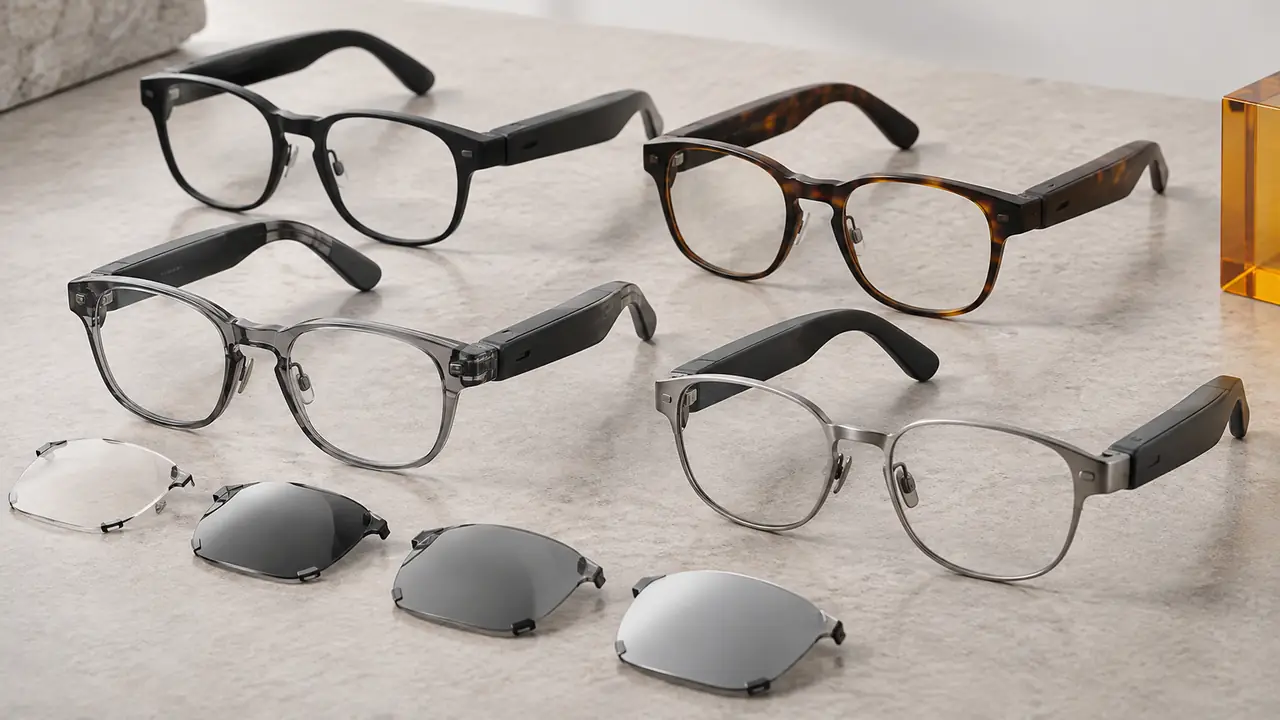
What a polarized lens is, structurally
A polarized lens is a tinted lens with a polarizing film built into it. The film is a stretched polymer layer that passes light vibrating in one direction and absorbs light vibrating at right angles to it. Light reflected from flat surfaces such as water, wet roads or car bonnets is partly polarized horizontally, so a lens with its film axis set vertically passes less of that reflected light than a plain tinted lens of the same darkness. That is the whole mechanism, and it is the only thing a listing needs to say about it: the lens filters horizontally polarized reflected light, per the lens specification.
What a polarized lens is not matters just as much for copy. Polarization says nothing about UV blocking, which is a separate absorber in the lens material or coating, and nothing about the light transmission category, which depends on the tint. A polarized lens can be Category 2 or Category 3 under ISO 12312-1, and it can carry a UV400 rating or not. Each of those facts comes from its own line in the test report, which is why the spec sheet lists them separately.
TAC, polycarbonate and nylon builds
Three lens materials carry most polarized programs. They differ in how the film is held, how thick the lens has to be and how the lens behaves in the drop ball test required for eyewear in the United States under 21 CFR 801.410.
| Build | How the film is held | Strengths | Watch points |
|---|---|---|---|
| TAC (cellulose triacetate) | Film laminated between thin TAC layers, then formed to a curve | Light, thin, widely available in many tints and mirror colours | Lower stiffness; edge chipping and delamination if cut or mounted poorly |
| PC (polycarbonate) | Film insert molded inside polycarbonate | Tough, suits sports wraps and kids lines | Softer surface needs a hard coat; possible stress patterns visible through the film |
| Nylon (polyamide) | Film insert molded inside nylon | Clear optics with good resilience, premium feel | More process control needed; longer sampling for new curves |
For smart glasses the choice is also about the front. TAC sheets are cut to shape and suit catalog fronts with many lens shapes; PC and nylon lenses are molded, so a custom shape needs a lens mold and fits better with full custom programs. Sports smart glasses often use PC for wrap curves, while lifestyle audio frames lean toward TAC for cost and colour range. The sports line is described on sports smart glasses.
Polarization, phones and displays
Smart glasses wearers look at screens all the time - a phone to change a track, a cycling computer, a car dashboard. Many LCD screens emit polarized light, and depending on the angle between the screen's polarization and the lens film, the screen can look dimmer or even dark through a polarized lens. That is a property of the physics, not a defect, but it is a common source of complaints if nobody warned the customer.
Three practical steps help. First, check the lens with the screens your customers actually use, in portrait and landscape, before approving the golden sample. Second, mention screen visibility in the product page and the insert so the behaviour is expected. Third, for lines aimed at drivers or riders who read a dashboard display all day, think twice about polarized as the default and offer a non-polarized or photochromic alternative in the same front. Interchangeable lenses make that easier, because one frame can ship with a polarized set and a clear or photochromic set; the comparison polarized vs photochromic smart glasses lays out the stocking decision.
Standards and what the test report should show
Polarized lenses go through the same optical rules as any sunglass lens. In Europe that is EN ISO 12312-1, which sets the transmittance categories 0 to 4, UV requirements and labelling, including the warning that Category 4 lenses are not suitable for driving. In North America the reference for non-prescription sunglasses and fashion eyewear is ANSI Z80.3, and for the US market the drop ball impact test under 21 CFR 801.410 applies to eyeglasses and sunglasses. The background is in lens categories under ISO 12312-1.
A usable test report for a polarized smart glasses lens should show, at minimum:
- the transmittance category and the measured luminous transmittance for the lens as supplied;
- the UV result, which is what supports a UV400 label - see UV400 explained;
- the polarizing result required for polarizing filters under the standard used;
- impact results for the US market under 21 CFR 801.410;
- the lens material, tint, coating and mirror layer, so the report matches the bill of materials.
Reports are issued by the lens plant or a test lab for each program and verified by the desk against the golden sample; confirm the exact scope for your markets with your test lab.
Sourcing and incoming inspection
Polarized lenses for smart glasses are usually sourced from lens specialists in Danyang and Xiamen rather than from the electronics plant. Local reporting describes Danyang as producing more than 400 million pairs of lenses a year, and Xiamen as home to more than 300 eyewear companies with a large share of the domestic mid-to-high-end sunglasses market. The desk aligns the lens plant with the frame and temple assembly so that lens shape, base curve and groove depth match the front.
Incoming inspection for polarized lenses has a few specific checks beyond scratches and tint uniformity:
- Axis check. Each lens is viewed through a reference polarizer or test card to confirm the film axis is set correctly after cutting and mounting; a rotated film is a common lot defect.
- Delamination and edge check. Edges are inspected for lifting or bubbles, especially on TAC lenses after edging.
- Left-right match. Both lenses in a pair are compared for tint and mirror colour under the same light.
- Sweat and coating check. Samples from the lot go through the artificial sweat soak agreed in the test plan, since coatings on sports lines see sweat daily.
Lens choices affect quantities only a little on catalog fronts, but a molded custom lens adds a mold and sampling time; reference ranges are on MOQ and lead time. To specify a polarized line, list the front, lens material, tint category and markets on the quote form.