
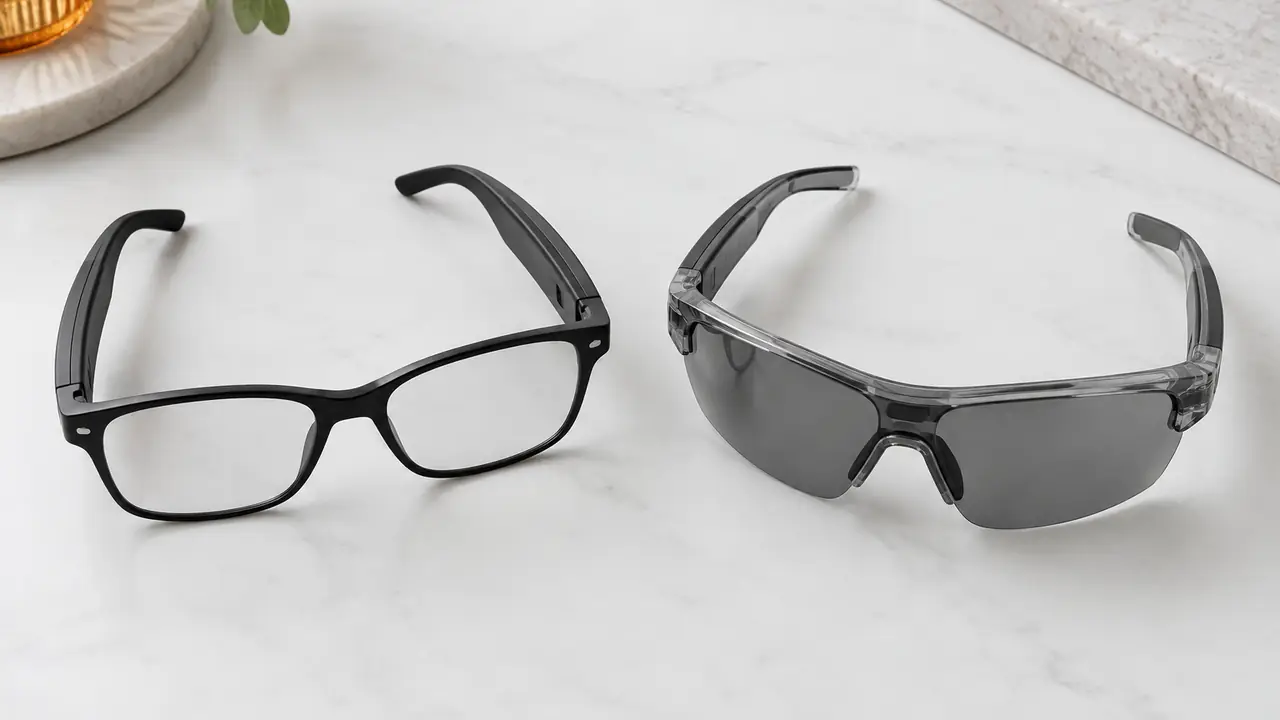
Why a kids line is its own product
Adult smart glasses are designed around adult faces, adult use and adult expectations of an app. A kids line changes every one of those. Faces are smaller and still growing, so frames need different sizes and more flex. Use is rougher: glasses are dropped, sat on, bent and left in bags. The person setting up the app is usually a parent, not the wearer, so settings such as volume limits and usage reminders move to a parent-facing part of the app. And in several markets, products designed for children fall under specific children's product rules that adult models do not.
The communication also changes. Listings for kids products are read closely by parents and by marketplaces, and health claims draw particular scrutiny. A kids line should be described in structural facts - frame material, weight, lens filters, firmware settings, test reports - and make no claims about health effects on children's eyes or ears.
Side-by-side comparison
Figures are typical across the category per spec sheets, confirmed per model and program.
| Dimension | Kids smart glasses | Adult models |
|---|---|---|
| Frame material | Light, flexible TR90 and silicone | TR90, PC, acetate, metal or titanium fronts |
| Weight | Usually under 30 g per pair, per model | About 27-50 g per pair |
| Sizes | Smaller lens widths and shorter temples per model | Commonly 48-56 mm lens width, 16-20 mm bridge, 140-150 mm temples |
| Lenses | UV400; optional blue-light filtering lenses with no health claim | Clear, sun, polarized, photochromic, Rx-ready |
| Volume | Volume cap per firmware, set by the parent | Full range per spec; about 75-90 dB SPL peak per manufacturer figures |
| App | Parent controls: usage-time reminders and volume cap per firmware | Wearer controls settings |
| Features | Usually audio and calls; camera rarely offered | Audio, AI, translation, camera, display |
| Regulatory extras | US CPSIA for children's products 12 and under: CPC, lead and phthalates | General product, radio, battery and optical rules |
| Typical MOQ | From 1,000 pairs per model | Catalog 50-500 pairs; logo 500-1,000 pairs |
Two rows explain most of the extra work. The firmware row means a kids line needs settings that adult lines do not, and those settings have to be tested on every firmware release. The regulatory row means extra testing and documents before the product can be listed, which is part of why minimum quantities are higher.
Frames, fit and durability
Kids frames are usually TR90 or silicone, sometimes with soft temple covers, because these materials flex and return rather than snapping. The electronics still sit in the temples, so the challenge is fitting a cell, speaker and board into a shorter, slimmer temple while keeping the pair light - typically under 30 grams per pair, per model. That usually means smaller cells and shorter runtime than adult models; the spec sheet should state runtime at the capped volume.
Durability testing is weighted toward rough use: temple bending, hinge opening and closing cycles, drops and sweat exposure, with cycles and pass criteria as a stated working default confirmed per order. Charging contacts and battery housings should be secure and not accessible without tools. Water resistance, where offered, is described as IPX4 or IP54 per test to IEC 60529, for splashes and sweat. See frame materials for the options and testing and inspection for the test plan.
Lenses, volume and app settings
Lens options for kids lines focus on structural facts. UV400 lenses block UV up to 400 nm, per the test report for the lens supplied. Optional blue-light filtering lenses can be offered, but they are described only by what they filter, with no health claim. Lens categories under ISO 12312-1 and ANSI Z80.3 apply as for any sunglasses, and the US drop ball test under 21 CFR 801.410 applies to the lenses. The note on blue light filtering lenses explains what can honestly be said.
Volume and usage settings are firmware features. A volume cap set by the parent in the app, and usage-time reminders that notify the parent or the wearer, are typical for the category, per firmware. They are described as settings, not as health features. Each firmware release should be checked to confirm the cap still applies after an update, and the app's handling of children's data should be documented and reviewed with counsel for each market. The checklist in smart glasses data and app permissions helps.
Compliance and documentation
All the adult rules still apply: FCC Part 15 or CE RED 2014/53/EU with EN 18031, UN 38.3 and IEC 62133-2 for the cells, optical standards for the lenses, RoHS, REACH and the EU General Product Safety Regulation. In the US, a product designed primarily for children 12 and under is a children's product under CPSIA, which typically means third-party testing for lead and phthalates and a Children's Product Certificate. Whether other children's product rules apply in each market is a question for your test lab and counsel. Test reports are held by partner plants or labs and verified per project. The detail is in CPSIA for kids smart glasses.
Packaging and listings need age grading, clear charging instructions for parents and battery warnings. Retailers often ask for these documents before listing, so they belong in the sample stage, not after production. A short parent guide in the box - how to pair, how to set the volume cap and reminders, how to charge and store the pair - reduces support contacts and early returns, and gives retail staff a simple script for the shop floor.
Which to choose
Choose an adult model, sized small, only when the target customer is teenagers or adults with smaller faces and the product is not marketed to children. Choose a dedicated kids line when the product is designed and sold for children: it needs the lighter TR90 or silicone frame, the UV400 lens default, parent controls per firmware and the CPSIA route in the US. Kids lines typically start at 1,000 pairs per model, as a reference range confirmed in writing per program on MOQ and lead time. Retailers planning a family range can pair a kids line with an adult Bluetooth audio glasses model. Share the age range, markets and channels on the quote form.