
Two answers to first-person footage
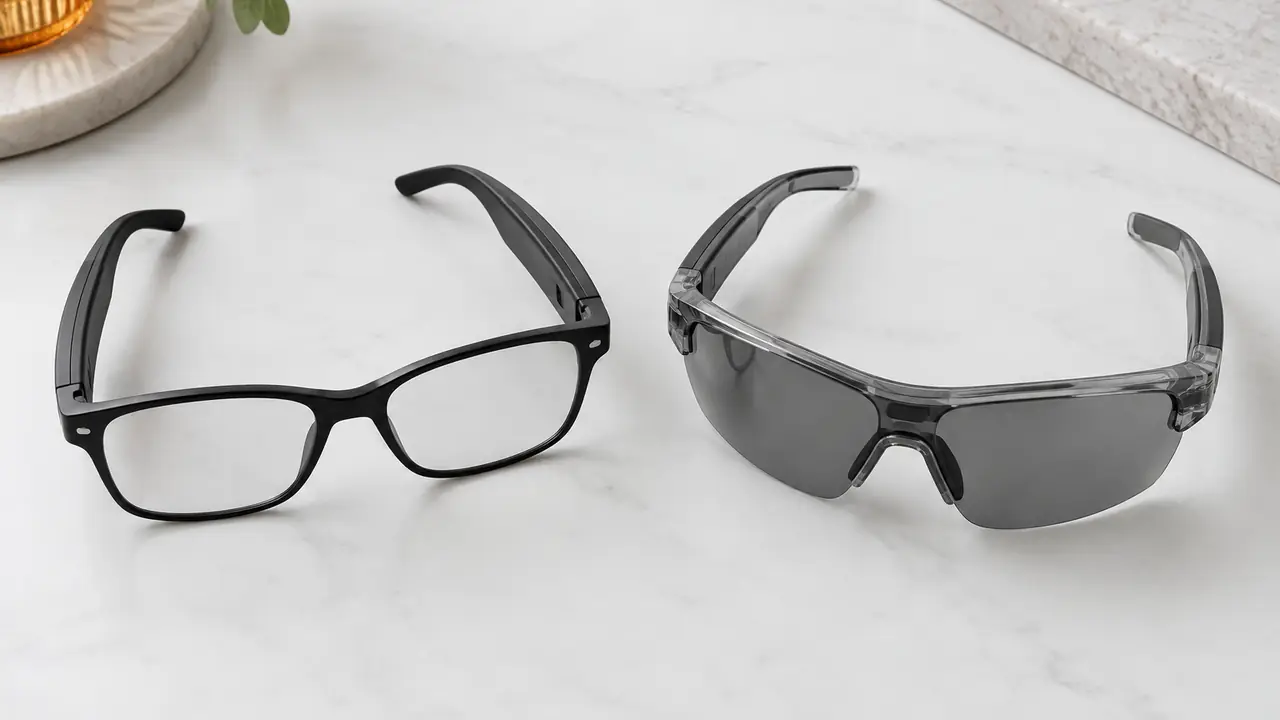
An action camera is a dedicated camera in a rugged body. It is mounted on a helmet, chest harness, handlebar or pole, and it is built first for image quality, stabilisation and durability. Camera glasses put a small camera module at the hinge or the bridge of an ordinary-looking frame, so the camera sees roughly what the wearer sees, at eye height, without a mount. The glasses still have to work as glasses: fit the face, hold lenses to an optical standard, and usually play audio as well.
The two categories overlap in the content they produce - point-of-view clips - but not in the experience. An action camera is set up for a session. Camera glasses are worn, and recording happens in moments: a short clip while walking, a photo of something in front of the wearer, a hands-free record of a task. That difference shapes the specification, the listing and, most importantly, the privacy obligations around the product.
Side-by-side comparison
Figures for camera glasses are typical across the category per spec sheets. Action cameras are described qualitatively; their specifications vary by tier and are not summarised here.
| Dimension | Camera glasses | Action cameras |
|---|---|---|
| Point of view | Eye height, follows head movement | Wherever mounted: helmet, chest, bar, pole |
| Sensor and video | 5-12 MP real sensors common; 1080p mainstream, 4K on higher tiers | Larger sensors and higher video modes on most tiers |
| Stabilisation | Limited by module size; electronic stabilisation per firmware | A core feature on most models |
| Mounting and grip | None needed; worn as eyewear | Needs a mount or hand grip |
| Storage and transfer | 16-128 GB internal or plus microSD; Wi-Fi transfer plus Bluetooth | Memory card based; app or cable transfer |
| Ruggedness | Water-resistant per IP rating tested per IEC 60529 | Rugged housings are a core feature |
| Other functions | Audio, calls, sun or clear lenses | Camera only |
| Privacy signal | Recording indicator LED on the frame is mandatory in practice | The camera itself is visible; indicator lights per model |
| Typical customer | Creators, travellers, hands-free documentation | Sports, outdoor and vehicle recording |
Beware headline megapixel figures on low-cost camera glasses: some listings quote interpolated values above what the real sensor delivers. The desk checks the actual sensor on the spec sheet and the golden sample. The detail is in camera glasses specs.
Image quality, runtime and handling
Action cameras win on image quality in demanding conditions. Their larger sensors, optics and stabilisation are built for speed and vibration. A camera module in a hinge is constrained by space and weight, so the honest pitch for camera glasses is convenience and natural viewpoint, not out-performing a dedicated camera on a mountain bike trail.
Runtime has to be read carefully. Camera glasses share a small temple battery between the camera, Wi-Fi transfer, audio and the chipset; recording video draws far more than music playback. A pair rated for many hours of music may record far less video, and spec sheets should state recording time separately and under which settings it was measured. The camera module page explains how module choice, heat and battery placement interact.
Handling favours glasses for short, frequent clips. There is nothing to mount and nothing to hold, which is why content creators and field teams use them for walk-throughs, travel moments and task records. Action cameras favour planned sessions where the user sets angle and settings in advance.
Storage and transfer are worth a separate check. Camera glasses commonly carry 16-128 GB of internal storage, sometimes with a microSD slot, and move files to the phone over Wi-Fi with Bluetooth handling control. Transfer speed, app stability and how the app handles large batches of clips decide much of the user experience, and they are a frequent source of reviews. Ask for the app build used on the golden sample and test a full day of clips before committing to a model.
Privacy and the recording indicator
This is the dimension where the two categories differ most. People around an action camera can see a camera. People around camera glasses may not realise a frame contains one, so the product has to signal recording clearly. Camera glasses lines specified through the desk always carry a recording indicator LED, and listings describe the product as camera glasses with a visible indicator - never in language that suggests concealment.
In October 2026 the European Data Protection Board adopted a statement on smart glasses. It is guidance, not new law, but it sets clear expectations: manufacturers rather than wearers should carry the duty to inform; the indicator should be visible in different lighting; recording and photo capture should use different light patterns; and the device should not record if the indicator is covered. The statement also notes that a white LED can be mistaken for a reflection. Buyers selling into Europe should brief these points into the firmware and the indicator design from the start, and confirm their own obligations with counsel. More on this is in camera glasses privacy.
Compliance and logistics differences
Both categories need radio approval where they include Wi-Fi or Bluetooth (FCC Part 15 in the US, CE RED 2014/53/EU in the EU with EN 18031 cybersecurity standards applying to wearable radio equipment since August 2025) and battery documents such as UN 38.3. Camera glasses add an optical layer for the lenses, such as ISO 12312-1 or ANSI Z80.3, and the indicator expectations above. For customs, camera glasses are often referenced under HS 8525.89, while action cameras sit in camera headings - confirm both with a customs broker. The certification guide sets out the full scope by market.
Which to stock
Stock action cameras when the customer is recording sport, speed or rough conditions and wants the best image possible. Stock camera glasses when the customer values a natural eye-height view, hands-free capture in short moments, and audio in the same device - creators, travellers and documentation teams in particular, as described on content creation use. Start with a catalog model that already has a clear recording indicator, then specify indicator behaviour and lens options for a logo program. Catalog models typically start at 50-500 pairs per model, with logo programs at 500-1,000 pairs, as reference ranges confirmed in writing per program on MOQ and lead time. Share your channel and target markets on the quote form.