
Why the scope is wider than it looks
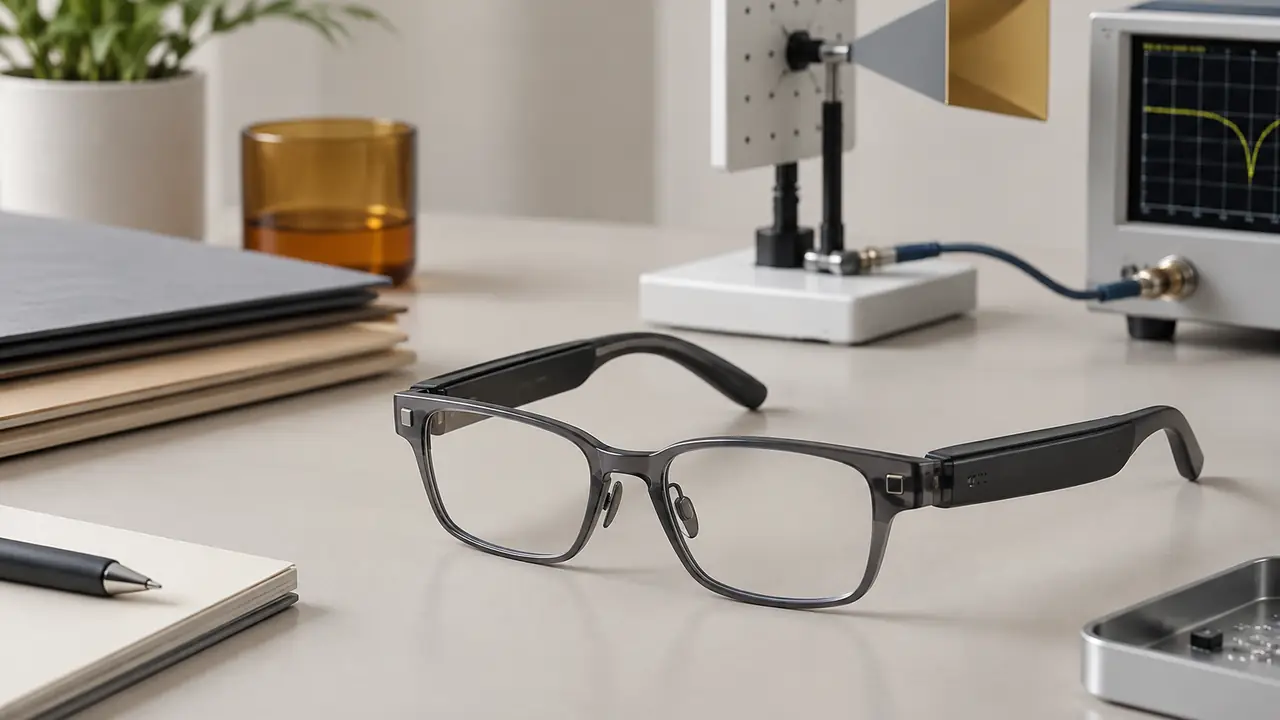
A pair of audio glasses looks like a simple accessory, but a test lab sees three products in one frame. There is a Bluetooth transmitter and a digital circuit, which bring radio and EMC rules. There is a small lithium-ion cell in each temple, which brings battery safety and transport rules. And there is a front with lenses that sits in front of the eyes, which brings eyewear rules: impact resistance in the US, transmittance categories and UV for sunglass lenses in Europe. Camera and AI models add privacy expectations, and kids models add children's product rules on top.
The practical consequence is that a certification plan has to be written per market and per module before samples are frozen. If the plan is written after the golden sample is approved, labels, user manuals and packaging often have to be reprinted, and a design change for one market can invalidate a report already issued for another. The list below is a starting map, not a legal opinion. The exact scope for each program is set with the test lab, and anything that turns on interpretation should be confirmed with your test lab or counsel.
The checklist by market
The table groups the standards that come up most often for audio, AI and camera glasses. Not every row applies to every product, and some markets add national steps that a lab will flag during quotation.
| Market | Radio and EMC | Safety and RF exposure | Optics and product |
|---|---|---|---|
| United States | FCC Part 15.247 for the 2.4 GHz transmitter, Part 15 Subpart B for the digital circuit, FCC ID label | RF exposure under 47 CFR 1.1307, 1.1310 and 2.1093 | 21 CFR 801.410 drop ball impact test; ANSI Z80.3 for nonprescription sunglass and fashion eyewear; CPSIA for children's products |
| European Union | CE under RED 2014/53/EU: EN 300 328 for spectrum, EN 301 489-1 and -17 for EMC; EN 18031-1, -2 and -3 for cybersecurity | EN 62368-1 for safety; EN 50566 or EN 62479 for RF exposure | EN ISO 12312-1 for sunglass lenses; RoHS 2011/65/EU, REACH SVHC, WEEE, GPSR; EU Battery Regulation 2023/1542 |
| United Kingdom | UKCA route, confirmed per project | Per the lab's UK scope | Lens and product rules per the lab's UK scope |
| Japan and Korea | MIC radio approval (TELEC) in Japan; KC in Korea | Per project | Per project |
| All markets | Bluetooth SIG qualification (QDID or Declaration ID) where the Bluetooth name and logo are used | IEC 62133-2 for portable lithium cells | UN 38.3 test summary; UN3481 under PI 967 for air shipments |
United States: radio, optics and children's products
For the US, the radio side is usually the longest item. The Bluetooth transmitter is tested under FCC Part 15.247 and the rest of the circuit under Part 15 Subpart B; the grant gives the product an FCC ID, which has to appear on the product or in an approved alternative location together with the Part 15 statement. Because glasses sit on the head, the lab also assesses RF exposure under the 47 CFR rules listed above. The detail of what the lab tests is covered in FCC Part 15 for Bluetooth glasses.
The eyewear side is easy to forget. Under 21 CFR 801.410, eyeglasses and sunglasses sold in the US must have impact-resistant lenses verified by a drop ball test, and many importers also test against ANSI Z80.3 for nonprescription sunglass and fashion eyewear. Where a line is designed or marketed for children aged 12 or under, CPSIA applies and a Children's Product Certificate based on third-party testing is needed.
European Union: RED, cybersecurity and the product rules
In the EU, a smart glasses product is radio equipment under RED 2014/53/EU, and the declaration of conformity usually rests on EN 300 328 for the 2.4 GHz band, EN 301 489-1 and -17 for EMC, EN 62368-1 for electrical safety and EN 50566 or EN 62479 for RF exposure. Since 1 August 2025, Delegated Regulation (EU) 2022/30 has also activated the cybersecurity requirements of RED Article 3(3)(d), (e) and (f), and it names glasses explicitly as wearable radio equipment. The harmonised standards are EN 18031-1, -2 and -3; from 11 December 2027 these requirements move to the Cyber Resilience Act under Delegated Regulation (EU) 2026/339. The practical effect for app-connected glasses is explained in RED cybersecurity and EN 18031.
Alongside RED, sunglass lenses fall under EN ISO 12312-1, which sets UV requirements and filter categories 0 to 4 and requires a warning that category 4 lenses are not suitable for driving. The product also has to meet RoHS, REACH SVHC disclosure, WEEE marking and registration, the General Product Safety Regulation, and the EU Battery Regulation 2023/1542 for the cells inside.
Batteries, shipping and the other markets
Batteries cut across every market. Partner plants are usually asked for IEC 62133-2 reports for the cells or packs and a UN 38.3 test summary, which carriers and forwarders check before accepting shipments. Glasses with the battery built in usually ship as UN3481, lithium-ion batteries contained in equipment, under Packing Instruction 967 Section II when the cell and battery limits are met; a separate charging case with its own battery is judged per watt-hour. The shipping side is covered in UN 38.3 for smart glasses.
For the UK, a UKCA route is confirmed per project with the lab. For Japan, radio approval under MIC rules (often called TELEC) is required for the Bluetooth radio; for Korea, KC certification. These are quoted per project because the scope depends on the chipset, the antenna and whether a pre-approved radio is used. Camera glasses also carry privacy expectations: the EDPB statement adopted on 13 October 2026 is guidance rather than a new regulation, but it sets out what regulators expect from recording indicator LEDs.
Building the document pack
A buyer-ready document pack is more than a folder of certificates. Each report should name the exact model, list the hardware and firmware version tested, and match the product that ships. The usual steps are below; the desk follows the same order on every program.
- Fix the markets and channels. Retail channels and marketplaces often ask for more than the legal minimum, such as the UN 38.3 summary and the FCC ID on the listing.
- Freeze the hardware. Antenna, battery and board changes after testing usually mean re-testing.
- Quote the lab scope. Lab testing for FCC or CE commonly takes 3 to 6 weeks depending on lab and scope; this time sits outside the production lead time.
- Check labels and manuals. FCC ID, CE mark, battery and WEEE symbols, the category 4 driving warning where relevant.
- Verify per lot. Pre-shipment inspection confirms that the shipped product matches the tested one.
The full certification walkthrough is on the certification guide, and the test items the desk can arrange are on testing and inspection. Certification time is planned alongside the reference ranges on MOQ and lead time; when your markets are clear, list them on the quote form so the plan is built in from the first sample.