
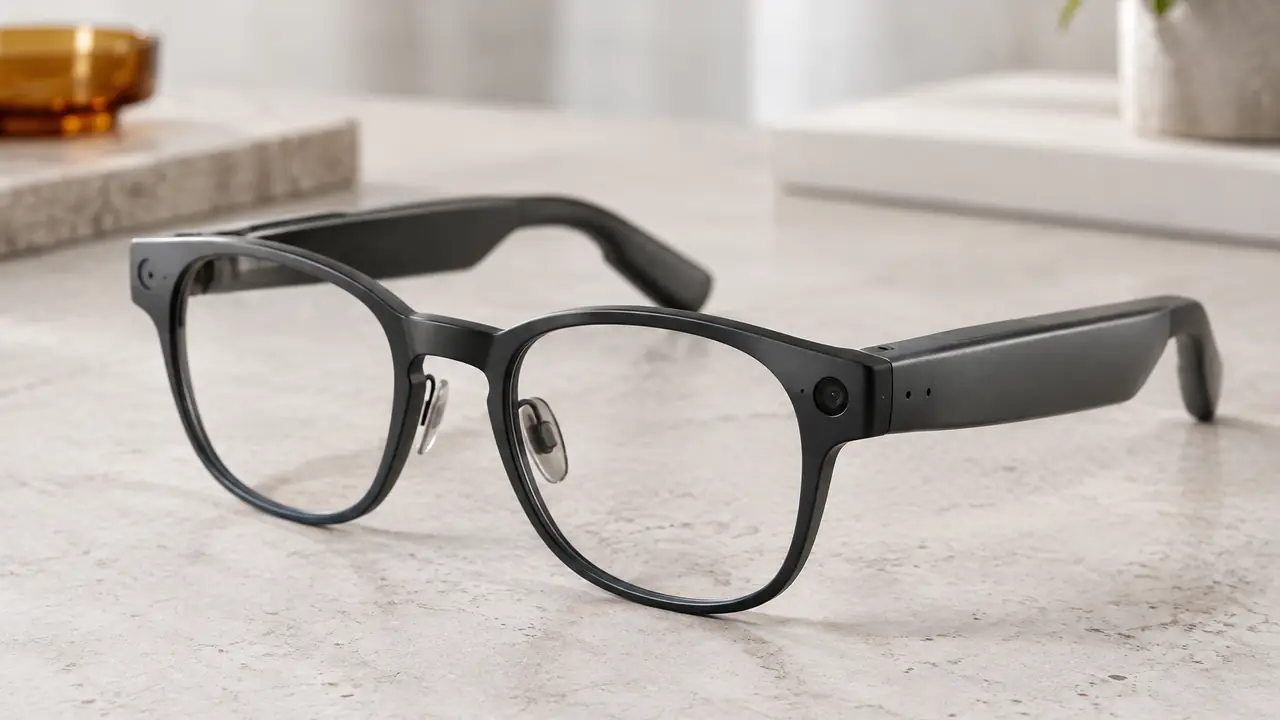
Who buys developer glasses and why
Consumer smart glasses are closed systems: the companion app controls the device and third parties cannot add functions. Developer glasses open part of that system. Typical buyers are software companies building applications for field work, warehouses, tours or accessibility services; research groups studying sensors, voice interfaces or wearable interaction; and enterprise teams that need glasses to talk to their own backend instead of a consumer app. Some brands also buy developer units early in a program so their app team can start work before the final hardware is ready.
What these buyers need differs from consumer programs. Battery life and styling still matter, but the deciding factors are documentation, access level, stability of the interfaces across firmware versions and support from the solution provider. Access is set per solution provider, so the first job in a developer program is to find out exactly what each candidate opens and on what terms.
Access levels, from app SDK to firmware
Developer access comes in layers. Few products open all of them, and the deeper the layer, the more the agreement with the solution provider matters. The table outlines the usual layers and what to ask.
| Access layer | What it allows | What to ask the solution provider |
|---|---|---|
| Phone-side SDK | Build a phone app that controls the glasses, reads sensors and plays audio | Supported phone platforms, sample code, licence terms, update policy |
| BLE GATT services | Talk to the glasses directly over documented Bluetooth Low Energy services and characteristics | Service list, data formats, pairing and bonding rules, versioning |
| Serial or debug port | Read logs and send commands on engineering samples during development | Connector type, whether it is closed on production units |
| Firmware customisation | Change on-device behaviour, add features within the provider's framework | Toolchain, source availability, review and signing process |
| OTA update control | Push firmware updates to a fleet from your own system | Update server options, signing keys, rollback behaviour |
For many enterprise applications the first two layers are enough: a custom phone app plus documented BLE services covers audio prompts, button events, sensor reads and status. Firmware-level work adds power but also responsibility for stability and compliance.
Licence terms deserve the same attention as the technical layers. Check whether the SDK may be used in a commercial product, whether applications built on it can be distributed to your customers without further approval, and what happens to your application if the solution provider discontinues the model or changes the SDK. For multi-year enterprise deployments, ask how long the SDK and the GATT layout will be supported, and whether spare units on the same hardware revision can be supplied for replacements. A short written support commitment avoids rewriting software halfway through a rollout.
Working with BLE GATT
Bluetooth Low Energy organises device data into services and characteristics, defined by the GATT profile. On developer glasses, a well documented GATT layout lets your software read battery level, receive touch and gesture events, read inertial sensor data, trigger audio prompts or change settings without going through the consumer app. Ask for the full service and characteristic list, the data format of each value, which characteristics support notifications, and how security is handled - pairing mode, bonding and whether sensitive characteristics require an encrypted link.
Versioning is the point most often missed. If a firmware update renames or reorders characteristics, field applications break. The solution provider should commit, in the program documents, to how GATT changes are versioned and announced. Audio itself usually travels over the classic Bluetooth audio link or the newer LE Audio path, per chipset and firmware, rather than over custom GATT characteristics; check which path your application needs.
OTA access and security
Firmware updates over the air are how glasses get fixes and new functions after delivery. In a developer or enterprise program, the buyer may want to control when updates reach the fleet, or to deliver its own firmware builds. That raises security questions: updates must be signed so that only authorised firmware installs, failed updates should roll back safely, and debug access should be closed on production units. In the EU, connected glasses fall under the RED cybersecurity requirements since 1 August 2025, with the EN 18031 series as harmonised standards, and these points are part of that assessment; see RED cybersecurity and EN 18031.
Update reliability matters as much as security. Interrupted updates, low battery during flashing and version mismatches between app and firmware are the usual causes of bricked or misbehaving units. The failure patterns and remedies are in firmware update failures, and the general firmware and app approach on firmware and app.
Hardware options for developers
Developer glasses are often specified with more sensors than consumer models. Common options, per solution provider, include an inertial measurement unit for head movement and gestures, a camera module for image capture applications, Wi-Fi for faster data transfer, and extra microphones for voice interfaces. Each option adds weight, power draw and certification scope. A camera brings the recording indicator LED and the privacy rules covered in camera glasses privacy; Wi-Fi adds radio test items. Choose the smallest set of options that your application really needs.
Use case drives the choice. Field teams using glasses for hands-free calls and audio work instructions may need only microphones, buttons and BLE access; inspection applications may need a camera and Wi-Fi. The scenarios are on field work use and enterprise projects.
Small batches and documentation
Developer programs usually start small: a handful of engineering samples for the software team, then a small batch for a pilot. Catalog developer models often start at quantities in the range of 50 to 500 pairs, while custom hardware follows the ODM path with engineering samples in about 30 to 60 days including tooling. The documentation pack matters as much as the hardware: SDK and GATT reference, firmware release notes, debug instructions for engineering samples, compliance documents for the target markets and a support channel with the solution provider. Templora coordinates this pack with the partner plant and solution provider and verifies it per project. Send your application outline and the access level you need through the quote form; typical ranges are confirmed in writing per program on MOQ and lead time.